As the plane flew into Broome, I set eyes upon the endless blue of the Indian Ocean for the first time, and what a truly majestic sight it was…
Not really, it’s just another ocean, but what makes this particular ocean so special is what lies on it’ shores. Roebuck Bay. Ranked in the top 5 shorebirds sites in the world, the rich mudflats around Broome are a birders paradise.
Stepping off the plane, it’s hot. Not unbearably hot, as it’s only September, but hot enough to be slightly uncomfortable. Anyhow, being the twitcher I am, as soon as we unpacked at the hotel I was off with the birds. Common birds around the township of Broome include Rufous-throated and White-gaped Honeyeaters, Little Friarbirds, Great Bowerbirds, Grey-crowned Babblers, White-throated Gerygone, Mistletoebird, etc. An evening walk down Cable Beach yielded the first wader of the trip, an obliging Sanderling, allowing easy ID.
Now, being the lone birder of the family, the other “normal people” prefer to not spend their holidays walking through mud and visiting sewerage works, so it was lucky for everyone that I had been booked onto the Broome Bird Observatory’s “Bird of Broome” course. The following 5 days were so awesome I couldn’t begin to put them into words. But I’m going to try anyway.
The Birds of Broome Course
Day 1: Explore the Obs
After being shown to my room (with air conditioning!), I was off exploring the observatory. The birds were much the same as in Broome, and being quite hot, it was productive to sit in the Shadehouse and observe the birds at the bird baths. No Blue and White Flycatcher this time, but a Broad-billed Flycatcher made an appearance, and the resident finches (long-tailed and double-barred) appeared regularly, as did the resident Brown Goshawks.
Day 2: Waders and Plains
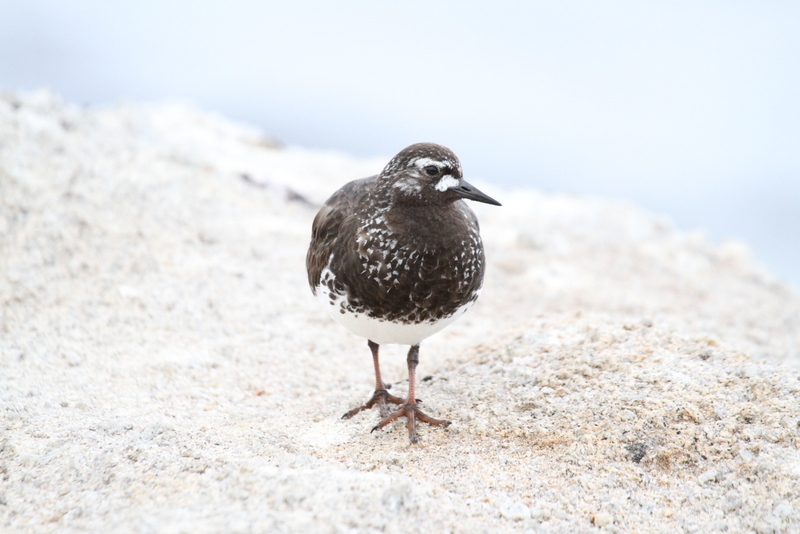
Now, being a Sydneysider (an area that doesn’t have a big wader area like Werribee), I hadn’t had the opportunity to observe many waders previously. Roebuck Bay helped with this, and the BBO staff knew exactly where to go to see the flock of birds, pushed up the beach by the high tide. In 2 hours, I had seen 9 species of wader I’d never seen before, including 2 of the the Broome specialties, Asian Dowitcher and Broad-billed Sandpiper. The Dowitcher played hard to get today – as soon as Glen spotted one, the flock flushed. After it had landed, I located the bird again, but a frigatebird put them up a second time. One hour later (after much searching), I was rewarded with tickable views, 5 seconds after which the flock was flushed by a Brahminy. Common waders in the bay included Bar-tailed and Black-tailed Godwit, Great and Red Knot, Grey-tailed Tattler, Terek Sandpiper, Grey Plover, Broad-billed Sandpiper, Lesser and Greater Sand Plover, Common Greenshank, Whimbrel, Eastern Curlew, Ruddy Turnstone, Red-necked Stint and Curlew Sandpiper.
The afternoon was filled by a Yellow Chat twitch, and with the BBO being one of the most reliable places for Yellow Chat in the country, I was hoping I would not be disappointed. Before we even got to the stake out site, most people in the car had had great views of Oriental Plovers, Singing Bushlark, and a Stubble Quail (way out of the accepted range for this species, but they have been recorded a few times over the years, and a few sightings have been made this year). The wind was blowing, so they chats sometimes refused to sit nicely on the bushes, but everyone got a good look at these lovely birds in the end.
Day 3: Waders
Another day concentrating on waders. While the only new birds I saw today were Yellow White-eye and Lesser Sand Plover, it was fantastic to sit on the cliff with a scope and enjoy the flocks of waders in their thousands. A trip to Cable Beach found a small group of Sanderlings and very compliant Red-capped Plovers.
Day 4: Town
With the tide high today, the waders had left the bay, so into town was where we headed (though not before watching a Collared Sparrowhawk at the bird baths for 20 minutes through the scope!). A Grey-headed Honeyeater provided brief views near the port, and Brown Boobies put on a show. The Ospreys with their nest on the old lighthouse entertained us during lunch, and the recently arrived Eastern Yellow Wagtail at “the ponds” allowed easy identification of its race, being in full breeding plumage. Barn Swallows flew overhead while I scanned the shores in the vain hope that the Semi-palmated Plover had returned, but there was nothing. The mangroves at Streeters Jetty were quiet for a while, even with our best pishing attempts. Some keen eyes finally spotted a male Mangrove Golden Whistler right next to that path, and a Dusky Gerygone sat still for a few seconds.
Day 5: Roebuck Station
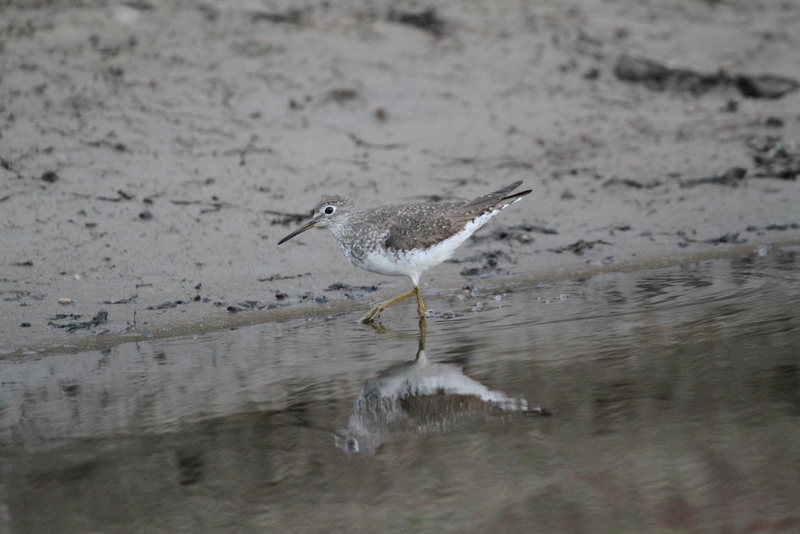
With high expectations for the day, we headed out first to the far eastern end of Roebuck Plains Station to try for Black-tailed Treecreeper, but found almost nothing save for a Jacky Winter and a pair of Dingoes. Taylor’s Lagoon, albeit without any shade, was a great spot, with a Black-breated Buzzard flying over as we exited the cars, and Marsh, Wood and Sharp-tailed Sandpipers feeding around the lake’s margins. Red-kneed Dotterels were in abundance, and in a smaller pond a kilometre away, the second big flock of Little Curlew for the season (18) was observed, along with a family of Brolgas. A juvenile Australian Pratincole also performed nicely for us while we tried to spot the solitary Flock(less) Bronzewing that had been hanging around (to no avail).
Lake Campion gave Wandering Whistling-Ducks, Green Pygmy Geese, Spotted Harrier, Whiskered Terns, Hardhead, Aussie Grebe (not Hoary-headed to the dismay of many), and a Black-necked Stork flying overhead. The following drive included Black-tailed Treecreeper in the distance, a Tawny Frogmouth not being a very good stick, and a Brown Songlark sitting on a fence.
Lake Eda, the last lake, had some very good birds on it, including Long-toed Stint (less than 10 metres away, AND next to a Sharp-tailed Sandpiper for size comparison!), more Australian Pratincoles, Intermediate Egrets, more Little Curlew and Spotted Harriers, and over a hundred Brolgas! What a sight! The highlight of the day for many followed – while stopping for a look at Oriental Plovers, I noticed a fat brown termite mound behind a plover, which was not a termite mound, but in fact a Flock Bronzewing! After 15 minutes or so of observing these poorly-known birds through some scopes, we were about to leave when a whole flock of Flock Bronzies flew in to join the 5 we had been watching. 185 in total counted from my photos later on!
Day 6: Mangroves
The last day of the course, and my inner twitcher wanted two more birds. White-breasted Whistler and Common Redshank. After donning mud-boots and walking around in the mud enough that the novelty of it had mostly wore off, I spent a long, stressful hour trying to get good views of the male White-breasted Whistler, many of whom were calling around us but evaded detection. Eventually, I found one, and watched with amazement as he sang his heart out less than 3 metres from me! Margot called, and I replied that I had already found the whistler. She then clarified that she had not the whistler, but the redshank! I rushed out to the scopes, and managed close(ish) views of a Common Redshank feeding in the mud for 10 minutes (6th record for the year I believe), but we soon had to rush off to avoid the quickly incoming tide.
After a fantastic few days, and a farewell to our hosts (they definitely deserved it!), the course participants went their separate ways. I went straight to the town mangroves, still needing that Red-headed Honeyeater, which I eventually found. The Broome mangroves are truly the most enjoyable place I have EVER been birding. Sure, you get a bit muddy, but getting a Mangrove Grey Fantail sit 30cm from your face, a Dusky Gerygone feeding next to your foot, and a Red-headed Honeyeater check you out from a metre away is worth it.
That’s all three at the same time by the way.
The next day, the family and I headed to Derby. The only thing I’m going to say is that king tides make the mud deep and impassable, even if you’ve timed your visit for low tide. Needless to say, I saw nothing. Best bird in Derby? A Geenshank that looked like a Yellowlegs. lol.
So, overall – Broome is a fantastic place (you need to visit the observatory to be able to experience it all), and it contains such a plethora of birds that you hardly know where to look, a real dilemma when you’re trying to find the one dowitcher in the 2000-strong flock of godwits. One day, when I have my own job to fund myself rather than relying on my every-so-lovely parents, I hope to revisit this magical area, just to experience it again (and again, and again, and again!)
Australian Pratincole
Barn Swallow
Flock Bronzewings
Eastern Yellow Wagtail
Long-tailed Finch
Sharp-tailed Sandpiper and Long-toed Stint comparison
Mangrove Golden Whistler
Oriental Plover
"Tattler Rocks" with waders
Waders (I'm sure there's a Dowitcher there somewhere!)
Distant Yellow Chat
As the plane flew into Broome, I set eyes upon the endless blue of the Indian Ocean for the first time, and what a truly majestic sight it was…
Not really, it’s just another ocean, but what makes this particular ocean so special is what lies on it’ shores. Roebuck Bay. Ranked in the top 5 shorebirds sites in the world, the rich mudflats around Broome are a birders paradise.
Stepping off the plane, it’s hot. Not unbearably hot, as it’s only September, but hot enough to be slightly uncomfortable. Anyhow, being the twitcher I am, as soon as we unpacked at the hotel I was off with the birds. Common birds around the township of Broome include Rufous-throated and White-gaped Honeyeaters, Little Friarbirds, Great Bowerbirds, Grey-crowned Babblers, White-throated Gerygone, Mistletoebird, etc. An evening walk down Cable Beach yielded the first wader of the trip, an obliging Sanderling, allowing easy ID.
Now, being the lone birder of the family, the other “normal people” prefer to not spend their holidays walking through mud and visiting sewerage works, so it was lucky for everyone that I had been booked onto the Broome Bird Observatory’s “Bird of Broome” course. The following 5 days were so awesome I couldn’t begin to put them into words. But I’m going to try anyway.
The Birds of Broome Course
Day 1: Explore the Obs
After being shown to my room (with air conditioning!), I was off exploring the observatory. The birds were much the same as in Broome, and being quite hot, it was productive to sit in the Shadehouse and observe the birds at the bird baths. No Blue and White Flycatcher this time, but a Broad-billed Flycatcher made an appearance, and the resident finches (long-tailed and double-barred) appeared regularly, as did the resident Brown Goshawks.
Day 2: Waders and Plains
Now, being a Sydneysider (an area that doesn’t have a big wader area like Werribee), I hadn’t had the opportunity to observe many waders previously. Roebuck Bay helped with this, and the BBO staff knew exactly where to go to see the flock of birds, pushed up the beach by the high tide. In 2 hours, I had seen 9 species of wader I’d never seen before, including 2 of the the Broome specialties, Asian Dowitcher and Broad-billed Sandpiper. The Dowitcher played hard to get today – as soon as Glen spotted one, the flock flushed. After it had landed, I located the bird again, but a frigatebird put them up a second time. One hour later (after much searching), I was rewarded with tickable views, 5 seconds after which the flock was flushed by a Brahminy. Common waders in the bay included Bar-tailed and Black-tailed Godwit, Great and Red Knot, Grey-tailed Tattler, Terek Sandpiper, Grey Plover, Broad-billed Sandpiper, Lesser and Greater Sand Plover, Common Greenshank, Whimbrel, Eastern Curlew, Ruddy Turnstone, Red-necked Stint and Curlew Sandpiper.
The afternoon was filled by a Yellow Chat twitch, and with the BBO being one of the most reliable places for Yellow Chat in the country, I was hoping I would not be disappointed. Before we even got to the stake out site, most people in the car had had great views of Oriental Plovers, Singing Bushlark, and a Stubble Quail (way out of the accepted range for this species, but they have been recorded a few times over the years, and a few sightings have been made this year). The wind was blowing, so they chats sometimes refused to sit nicely on the bushes, but everyone got a good look at these lovely birds in the end.
Day 3: Waders
Another day concentrating on waders. While the only new birds I saw today were Yellow White-eye and Lesser Sand Plover, it was fantastic to sit on the cliff with a scope and enjoy the flocks of waders in their thousands. A trip to Cable Beach found a small group of Sanderlings and very compliant Red-capped Plovers.
Day 4: Town
With the tide high today, the waders had left the bay, so into town was where we headed (though not before watching a Collared Sparrowhawk at the bird baths for 20 minutes through the scope!). A Grey-headed Honeyeater provided brief views near the port, and Brown Boobies put on a show. The Ospreys with their nest on the old lighthouse entertained us during lunch, and the recently arrived Eastern Yellow Wagtail at “the ponds” allowed easy identification of its race, being in full breeding plumage. Barn Swallows flew overhead while I scanned the shores in the vain hope that the Semi-palmated Plover had returned, but there was nothing. The mangroves at Streeters Jetty were quiet for a while, even with our best pishing attempts. Some keen eyes finally spotted a male Mangrove Golden Whistler right next to that path, and a Dusky Gerygone sat still for a few seconds.
Day 5: Roebuck Station
With high expectations for the day, we headed out first to the far eastern end of Roebuck Plains Station to try for Black-tailed Treecreeper, but found almost nothing save for a Jacky Winter and a pair of Dingoes. Taylor’s Lagoon, albeit without any shade, was a great spot, with a Black-breated Buzzard flying over as we exited the cars, and Marsh, Wood and Sharp-tailed Sandpipers feeding around the lake’s margins. Red-kneed Dotterels were in abundance, and in a smaller pond a kilometre away, the second big flock of Little Curlew for the season (18) was observed, along with a family of Brolgas. A juvenile Australian Pratincole also performed nicely for us while we tried to spot the solitary Flock(less) Bronzewing that had been hanging around (to no avail).
Lake Campion gave Wandering Whistling-Ducks, Green Pygmy Geese, Spotted Harrier, Whiskered Terns, Hardhead, Aussie Grebe (not Hoary-headed to the dismay of many), and a Black-necked Stork flying overhead. The following drive included Black-tailed Treecreeper in the distance, a Tawny Frogmouth not being a very good stick, and a Brown Songlark sitting on a fence.
Lake Eda, the last lake, had some very good birds on it, including Long-toed Stint (less than 10 metres away, AND next to a Sharp-tailed Sandpiper for size comparison!), more Australian Pratincoles, Intermediate Egrets, more Little Curlew and Spotted Harriers, and over a hundred Brolgas! What a sight! The highlight of the day for many followed – while stopping for a look at Oriental Plovers, I noticed a fat brown termite mound behind a plover, which was not a termite mound, but in fact a Flock Bronzewing! After 15 minutes or so of observing these poorly-known birds through some scopes, we were about to leave when a whole flock of Flock Bronzies flew in to join the 5 we had been watching. 185 in total counted from my photos later on!
Day 6: Mangroves
The last day of the course, and my inner twitcher wanted two more birds. White-breasted Whistler and Common Redshank. After donning mud-boots and walking around in the mud enough that the novelty of it had mostly wore off, I spent a long, stressful hour trying to get good views of the male White-breasted Whistler, many of whom were calling around us but evaded detection. Eventually, I found one, and watched with amazement as he sang his heart out less than 3 metres from me! Margot called, and I replied that I had already found the whistler. She then clarified that she had not the whistler, but the redshank! I rushed out to the scopes, and managed close(ish) views of a Common Redshank feeding in the mud for 10 minutes (6th record for the year I believe), but we soon had to rush off to avoid the quickly incoming tide.
After a fantastic few days, and a farewell to our hosts (they definitely deserved it!), the course participants went their separate ways. I went straight to the town mangroves, still needing that Red-headed Honeyeater, which I eventually found. The Broome mangroves are truly the most enjoyable place I have EVER been birding. Sure, you get a bit muddy, but getting a Mangrove Grey Fantail sit 30cm from your face, a Dusky Gerygone feeding next to your foot, and a Red-headed Honeyeater check you out from a metre away is worth it.
That’s all three at the same time by the way.
The next day, the family and I headed to Derby. The only thing I’m going to say is that king tides make the mud deep and impassable, even if you’ve timed your visit for low tide. Needless to say, I saw nothing. Best bird in Derby? A Geenshank that looked like a Yellowlegs. lol.
So, overall – Broome is a fantastic place (you need to visit the observatory to be able to experience it all), and it contains such a plethora of birds that you hardly know where to look, a real dilemma when you’re trying to find the one dowitcher in the 2000-strong flock of godwits. One day, when I have my own job to fund myself rather than relying on my every-so-lovely parents, I hope to revisit this magical area, just to experience it again (and again, and again, and again!)
Australian Pratincole
Barn Swallow
Flock Bronzewings
Eastern Yellow Wagtail
Long-tailed Finch
Sharp-tailed Sandpiper and Long-toed Stint comparison
Mangrove Golden Whistler
Oriental Plover
"Tattler Rocks" with waders
Waders (I'm sure there's a Dowitcher there somewhere!)
Distant Yellow Chat
reade more...
Résuméabuiyad
 Booted Eagle (Hieraaetus pennatus), light phase. Portaje, Cáceres, 27-07-2010. By Eva Palacios.