Pages

Weekly Update

Most of the week has been spent catching Meadow Pipits on there Migration south and a few bits in between, no Mist netting at all this week as the wind has been pretty bad.

Birds Ringed

113 Meadow Pipits


                                                                         21 Linnets
3 Goldfinch
2 Pied Wagtail

all caught at the Point Of Ayre Whoosh Net Site

3 Wheatears ringed at Ramsey


Also
 6 Dunlin
and
1 Ringed Plover ringed


Most of the week has been spent catching Meadow Pipits on there Migration south and a few bits in between, no Mist netting at all this week as the wind has been pretty bad.

Birds Ringed

113 Meadow Pipits


                                                                         21 Linnets
3 Goldfinch
2 Pied Wagtail

all caught at the Point Of Ayre Whoosh Net Site

3 Wheatears ringed at Ramsey


Also
 6 Dunlin
and
1 Ringed Plover ringed


reade more... Résuméabuiyad

Short-billed Dowitcher - finally!

I was supposed to be going to see Britain's second ever Short-billed Dowitcher last Saturday night, but my brain was so frazzled after the Genome Informatics 2012 conference that I'd been attending in Cambridge that I decided that I was just going to head home for fish and chips instead of driving overnight, sleeping in the car and fighting the traffic back to Norwich the next day. So, this weekend I drove over from Norwich to Stoke with Matthew on Saturday to watch the (very entertaining) Stoke v Man Ceth game and then set my alarm for 4am to get up to drive down to Lodmoor, Dorset this morning. It was on show almost immediately after I arrived and showed nicely for the half-hour that I was present.
It was nice to meet Vincent Legrand from Belgium, twitching the dowitcher with a bunch of other Western Pal birders from Brussels.

Juvenile Short-billed Dowitcher


I was supposed to be going to see Britain's second ever Short-billed Dowitcher last Saturday night, but my brain was so frazzled after the Genome Informatics 2012 conference that I'd been attending in Cambridge that I decided that I was just going to head home for fish and chips instead of driving overnight, sleeping in the car and fighting the traffic back to Norwich the next day. So, this weekend I drove over from Norwich to Stoke with Matthew on Saturday to watch the (very entertaining) Stoke v Man Ceth game and then set my alarm for 4am to get up to drive down to Lodmoor, Dorset this morning. It was on show almost immediately after I arrived and showed nicely for the half-hour that I was present.
It was nice to meet Vincent Legrand from Belgium, twitching the dowitcher with a bunch of other Western Pal birders from Brussels.

Juvenile Short-billed Dowitcher


reade more... Résuméabuiyad

BUFF-BREASTED SANDPIPER: THREE AND COUNTING

 A juvenile Buff-Breasted Sandpiper (Tryngites subruficollis) was spotted on the morning of 13 September 2012 by Sergio Mayordomo at Portaje Reservoir in Cáceres (top photo). It was feeding on one of the reservoir banks on newly sprouted grass in the company of migrant Yellow Wagtails. At midday it was seen again by Eva Palacios and Miguel Ángel Muñoz (bottom photo).

This is the third record for the species in Extremadura, all made successively in the last three years (Valdecañas, October 2010; Galisteo, October 2011; and Portaje, September 2012). All were juveniles seen in the province of Cáceres. The sightings are too new to have been officially accepted by the rarities committee as yet, but in all three cases there are photographs that prove the identification beyond a shadow of a doubt.

This vagrant American wader is now turning up more regularly in Spain with 45 accepted records involving 49 birds up to 2009. This figures will no doubt rise in future reports because there were considerable influxes of this species in both 2010 and 2011, with 25-35 birds recorded each year. In 2012, so far, there have been at least two sightings in August and another on the same day of 13 September in Vilafáfila (Zamora). Paradoxically, this increase of records in Spain does not at all tally with the specie's trend as a whole, since its status has now been downgraded by the IUCN to "Near Threatened" (NT).

Other post on Buff-Breasted Sandpiper in Extremadura.
 A juvenile Buff-Breasted Sandpiper (Tryngites subruficollis) was spotted on the morning of 13 September 2012 by Sergio Mayordomo at Portaje Reservoir in Cáceres (top photo). It was feeding on one of the reservoir banks on newly sprouted grass in the company of migrant Yellow Wagtails. At midday it was seen again by Eva Palacios and Miguel Ángel Muñoz (bottom photo).

This is the third record for the species in Extremadura, all made successively in the last three years (Valdecañas, October 2010; Galisteo, October 2011; and Portaje, September 2012). All were juveniles seen in the province of Cáceres. The sightings are too new to have been officially accepted by the rarities committee as yet, but in all three cases there are photographs that prove the identification beyond a shadow of a doubt.

This vagrant American wader is now turning up more regularly in Spain with 45 accepted records involving 49 birds up to 2009. This figures will no doubt rise in future reports because there were considerable influxes of this species in both 2010 and 2011, with 25-35 birds recorded each year. In 2012, so far, there have been at least two sightings in August and another on the same day of 13 September in Vilafáfila (Zamora). Paradoxically, this increase of records in Spain does not at all tally with the specie's trend as a whole, since its status has now been downgraded by the IUCN to "Near Threatened" (NT).

Other post on Buff-Breasted Sandpiper in Extremadura.
reade more... Résuméabuiyad

EXTREMADURA CORMORANT COUNT 2012


A Spain-wide Cormorant (Phalacrocorax carbo) count was carried out in summer 2012. The provisional results for Extremadura, while awaiting publication of the overall data, are as follows.

Three colonies were found with a total of 651 occupied nests. The biggest colony, in La Serena reservoir, was visited twice. It comprises 619 nests in two clusters, the main one with 614 nests on half-sunken Holm Oaks and the other only 2 km away with 5 nests on Eucalyptus. The other two colonies found seem to be new, or at least unrecorded hitherto. One was at Alange reservoir, where a 23-nest Eucalyptus colony was found by chance on 12/07/12 (upper photograph; by Ángel Sánchez). The other new colony was at Alqueva reservoir, again on half-sunken Holm Oaks, with 9 nests counted on three visits from May to June. [Other post on Cormorant in Extremadura]


The Extremadura Cormorant trend is clearly upwards, with an exponential increase in only 10 years. Barring the one-off nest in Valuengo reservoir found in 1993 (Prieta and Mayordomo, 2012), the first Extremadura colony formed in La Serena reservoir in 2002. This colony grew from 10 pioneering pairs in 2002 to 102 in 2007 and 341 in 2011 (including 13 in Córdoba and one in Ciudad Real; Piñeiro, 2011) and 619 by 2012. Unless the final census results prove otherwise, this could well turn out to be Spain's biggest colony today. In 2007 there was a national breeding wildfowl count, including the Cormorant(Palomino and Molina, 2009). The published result included three Extremadura colonies, the abovementioned one in La Serena and another two at River Guadiana in Valdetorres and at Valuengo reservoir. There is however no trustworthy information on these two ostensible colonies, with no indications of actual or recent nesting in 2011 or 2012. The prudent option is therefore to rule them out. In 2012 two new colonies were found, once more on big reservoirs of the Badajoz basin, and regional figures have doubled in a single year. [Other blog entries on the Cormorant in Extremadura]


Collaborators. The La Serena and Alange colonies were found by the Junta de Extremadura: Ángel Sánchez, Domingo Rivera, Sergio Pérez, Miguel Ángel Sánchez, Fermín Sierra, Demetrio Vázquez, Irene Rodríguez, Sandra Blanco, José Manuel Rama and José María Castaño. The Alqueva colony was covered by Luis R. Hernández Díaz-Ambrona and Juan Carlos Panigua (SEO/BirdLife volunteers). 

Sources: 
- Piñeiro, X. 2011. Cormorán grande Phalacrocórax carbo (p. 487). In, Molina, B., Prieta, J., Lorenzo, J. A. and López-Jurado, C. Noticiario Ornitológico. Ardeola 58:481-516. 
- Palomino, D. and Molina, B. 2009. Aves acuáticas reproductoras en España. Población en 2007 y método de censo. SEO/BirdLife. Madrid. 
- Prieta, J. and Mayordomo, S. 2012. Aves de Extremadura, vol. 4. Años 2004-2008. Grupo Local SEO-Cáceres. Plasencia. [PDF]

A Spain-wide Cormorant (Phalacrocorax carbo) count was carried out in summer 2012. The provisional results for Extremadura, while awaiting publication of the overall data, are as follows.

Three colonies were found with a total of 651 occupied nests. The biggest colony, in La Serena reservoir, was visited twice. It comprises 619 nests in two clusters, the main one with 614 nests on half-sunken Holm Oaks and the other only 2 km away with 5 nests on Eucalyptus. The other two colonies found seem to be new, or at least unrecorded hitherto. One was at Alange reservoir, where a 23-nest Eucalyptus colony was found by chance on 12/07/12 (upper photograph; by Ángel Sánchez). The other new colony was at Alqueva reservoir, again on half-sunken Holm Oaks, with 9 nests counted on three visits from May to June. [Other post on Cormorant in Extremadura]


The Extremadura Cormorant trend is clearly upwards, with an exponential increase in only 10 years. Barring the one-off nest in Valuengo reservoir found in 1993 (Prieta and Mayordomo, 2012), the first Extremadura colony formed in La Serena reservoir in 2002. This colony grew from 10 pioneering pairs in 2002 to 102 in 2007 and 341 in 2011 (including 13 in Córdoba and one in Ciudad Real; Piñeiro, 2011) and 619 by 2012. Unless the final census results prove otherwise, this could well turn out to be Spain's biggest colony today. In 2007 there was a national breeding wildfowl count, including the Cormorant(Palomino and Molina, 2009). The published result included three Extremadura colonies, the abovementioned one in La Serena and another two at River Guadiana in Valdetorres and at Valuengo reservoir. There is however no trustworthy information on these two ostensible colonies, with no indications of actual or recent nesting in 2011 or 2012. The prudent option is therefore to rule them out. In 2012 two new colonies were found, once more on big reservoirs of the Badajoz basin, and regional figures have doubled in a single year. [Other blog entries on the Cormorant in Extremadura]


Collaborators. The La Serena and Alange colonies were found by the Junta de Extremadura: Ángel Sánchez, Domingo Rivera, Sergio Pérez, Miguel Ángel Sánchez, Fermín Sierra, Demetrio Vázquez, Irene Rodríguez, Sandra Blanco, José Manuel Rama and José María Castaño. The Alqueva colony was covered by Luis R. Hernández Díaz-Ambrona and Juan Carlos Panigua (SEO/BirdLife volunteers). 

Sources: 
- Piñeiro, X. 2011. Cormorán grande Phalacrocórax carbo (p. 487). In, Molina, B., Prieta, J., Lorenzo, J. A. and López-Jurado, C. Noticiario Ornitológico. Ardeola 58:481-516. 
- Palomino, D. and Molina, B. 2009. Aves acuáticas reproductoras en España. Población en 2007 y método de censo. SEO/BirdLife. Madrid. 
- Prieta, J. and Mayordomo, S. 2012. Aves de Extremadura, vol. 4. Años 2004-2008. Grupo Local SEO-Cáceres. Plasencia. [PDF]
reade more... Résuméabuiyad

2 Sep 2012 - Finally some migrants...

Headed out to Rush Hills Scrape first thing this morning and then birded Waxham south dunes. Not too much on the scrape - 25 Dunlin plus about 20 Ruff and a few Black-wits, but no too much else.

Although hard work, Waxham turned out to be quite good. A slow moving rain shower pushed quite a lot of hirundines  south (about 200 Barn Swallows and a slightly smaller number of House Martins) plus about 5 Common Swifts. The swifts that I saw well enough were all juveniles and one bird showed well, flying up and down the dunes. I've provided a few photos showing a number of features of juvenile Common Swift.

Other migrants in the dunes were 1 Spotted Flycatcher, 1 Reed Warbler, 1 Yellow Wagtail (perched on the top of the Hawthorn bushes), 8+ Blackcap, 5 Lesser Whitethroats, plus about 10 Common Whitethroat and 2 Chiffchaff which might have been local birds. Also 5 Yellow Wagtails flew over plus a Great Spotted Woodpecker.

A pair of Chinese Water-deer were a nice distraction on the way home.

Juvenile Common Swift - pale faced appearance and frosty underwing coverts.

Juvenile Common Swift - pale upper wing coverts

Juvenile Common Swift - frosty underwing coverts and scaly vent

Juvenile Common Swift - pale throat and forehead


Juvenile Common Swift - pointed tail feathers gives a 'Needle-tail' like appearance when tail fully closed.

Juvenile Common Swift

Juvenile Common Swift

Juvenile Common Swift - pointed tail feathers
Juvenile Yellow Wagtail.

Common Whitethroat

Lesser Whitethroat

Reed Warbler - migrant.

Reed Warbler - migrant.
Stag Chinese Water-deer (doe in background).

Doe Chinese Water-deer.


Headed out to Rush Hills Scrape first thing this morning and then birded Waxham south dunes. Not too much on the scrape - 25 Dunlin plus about 20 Ruff and a few Black-wits, but no too much else.

Although hard work, Waxham turned out to be quite good. A slow moving rain shower pushed quite a lot of hirundines  south (about 200 Barn Swallows and a slightly smaller number of House Martins) plus about 5 Common Swifts. The swifts that I saw well enough were all juveniles and one bird showed well, flying up and down the dunes. I've provided a few photos showing a number of features of juvenile Common Swift.

Other migrants in the dunes were 1 Spotted Flycatcher, 1 Reed Warbler, 1 Yellow Wagtail (perched on the top of the Hawthorn bushes), 8+ Blackcap, 5 Lesser Whitethroats, plus about 10 Common Whitethroat and 2 Chiffchaff which might have been local birds. Also 5 Yellow Wagtails flew over plus a Great Spotted Woodpecker.

A pair of Chinese Water-deer were a nice distraction on the way home.

Juvenile Common Swift - pale faced appearance and frosty underwing coverts.

Juvenile Common Swift - pale upper wing coverts

Juvenile Common Swift - frosty underwing coverts and scaly vent

Juvenile Common Swift - pale throat and forehead


Juvenile Common Swift - pointed tail feathers gives a 'Needle-tail' like appearance when tail fully closed.

Juvenile Common Swift

Juvenile Common Swift

Juvenile Common Swift - pointed tail feathers
Juvenile Yellow Wagtail.

Common Whitethroat

Lesser Whitethroat

Reed Warbler - migrant.

Reed Warbler - migrant.
Stag Chinese Water-deer (doe in background).

Doe Chinese Water-deer.


reade more... Résuméabuiyad

Seawatching and Linnets

Compared to last week this week has been a bit quiet on the ringing front , all down to the weather.
Lots of strong winds this week which made for some good Sea Watching if little else.

Bill Callow had 10 Black Terns up at the Point of Ayre on Monday and took some great shots.
also seen in last few days
40 Sandwich Terns feeding 
3 Arctic Skuas seen
1 Great Skua
100s of Manx Shearwaters past the point 
100s Gannets passing daily

Black Tern ©Bill Callow


Gannet
Distant Great Skua

Arctic Skuas ©Bill Callow

Ringed Cormorant Z6N  ©Brian Liggins


Thanks to Brian and Bill for some great shots check out there profiles on Birdguides 


Cormorant Z6N was ringed as a chick at the Maughold Colony back in June 2011

Ringing this week

50 new Linnets ringed at the Point of Ayre 

check out Kev's Blog for Augusts ringing Totals, over 600 birds ringed.


Compared to last week this week has been a bit quiet on the ringing front , all down to the weather.
Lots of strong winds this week which made for some good Sea Watching if little else.

Bill Callow had 10 Black Terns up at the Point of Ayre on Monday and took some great shots.
also seen in last few days
40 Sandwich Terns feeding 
3 Arctic Skuas seen
1 Great Skua
100s of Manx Shearwaters past the point 
100s Gannets passing daily

Black Tern ©Bill Callow


Gannet
Distant Great Skua

Arctic Skuas ©Bill Callow

Ringed Cormorant Z6N  ©Brian Liggins


Thanks to Brian and Bill for some great shots check out there profiles on Birdguides 


Cormorant Z6N was ringed as a chick at the Maughold Colony back in June 2011

Ringing this week

50 new Linnets ringed at the Point of Ayre 

check out Kev's Blog for Augusts ringing Totals, over 600 birds ringed.


reade more... Résuméabuiyad

Summer 2012

OK, I know it's a bit of a cop-out, having a 'summer' post. But you have to admit - nothing much happens in summer, so I've decided just to post some nice photos that I took over the summer. With visits mainly to Waxham and Cley with a few days in the Swiss Alps on a family holiday (and unsuccessfully seeing Rock Partridge), summer has been pretty quiet bird-wise.
I've started with some of the interesting stuff that I saw in Switzerland, and then finished with photos from North Norfolk. If you can identify any of the alpine flowers, please let me know. Thanks.

Convulvulus Hawk-moth, Ilanz, Switzerland.

Nutcraker, Vals, Switzerland.

Alpine flowers 1

Alpine Flowers 2
Alpine Flowers 3

Chamois
Chamois

Alpine Marmot


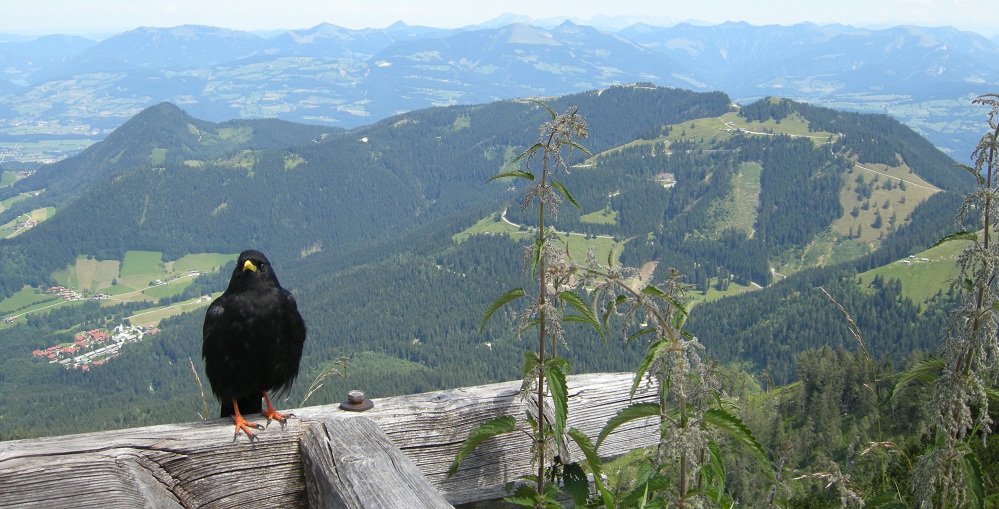
Alpine Chough, Eagles's Nest, Berchtesgaden, Germany

Female Shoveler, Cley

Female Shoveler, Cley

Friendly-neighbourhood Avocet, Cley.

Juvenile Marsh Harrier, Cley.

Red Deer, Hickling.

Skylark, Weybourne.

Marsh Harrier food-pass, Cley.

Male Tufted Duck, Cley.

Woodpigeion, Cley.

OK, I know it's a bit of a cop-out, having a 'summer' post. But you have to admit - nothing much happens in summer, so I've decided just to post some nice photos that I took over the summer. With visits mainly to Waxham and Cley with a few days in the Swiss Alps on a family holiday (and unsuccessfully seeing Rock Partridge), summer has been pretty quiet bird-wise.
I've started with some of the interesting stuff that I saw in Switzerland, and then finished with photos from North Norfolk. If you can identify any of the alpine flowers, please let me know. Thanks.

Convulvulus Hawk-moth, Ilanz, Switzerland.

Nutcraker, Vals, Switzerland.

Alpine flowers 1

Alpine Flowers 2
Alpine Flowers 3

Chamois
Chamois

Alpine Marmot


Alpine Chough, Eagles's Nest, Berchtesgaden, Germany

Female Shoveler, Cley

Female Shoveler, Cley

Friendly-neighbourhood Avocet, Cley.

Juvenile Marsh Harrier, Cley.

Red Deer, Hickling.

Skylark, Weybourne.

Marsh Harrier food-pass, Cley.

Male Tufted Duck, Cley.

Woodpigeion, Cley.

reade more... Résuméabuiyad