Now, coming here to live 6 months ago if this bird would of landed on my feeders back in Halifax i would of been pleased to see it as they are Great characters.
But to have one on the feeders in the Isle of Man is great as this bird on the island is a bit of a rarity with only a couple of sightings a year. This year definite proof of breeding has been recorded so things are on the up i hope for this species.
Gt Spotted Woodpecker Port e Vullen
Now, coming here to live 6 months ago if this bird would of landed on my feeders back in Halifax i would of been pleased to see it as they are Great characters.
But to have one on the feeders in the Isle of Man is great as this bird on the island is a bit of a rarity with only a couple of sightings a year. This year definite proof of breeding has been recorded so things are on the up i hope for this species.
I was out again with Kev on Monday down at Port St Mary. Placed the Gull traps out again and drew a blank.We decided to go for Rock Pipits and caught another 6. The rest of the week in between the wind and rain i have netted in the garden with 36 new birds being ringed
11 new Siskin 112 ringed in and around Garden
11 new Goldfinch
6 Blue Tits
3 Gt Tits
1 Chaffinch
3 House Sparrow
1 Dunnock
Garden
Also set woosh net up at the Point of Ayre
23 New Linnets ringed and 2 retraps
1 Dunnock
2 Meadow Pipits
6 Rock Pipits caught at Port Moore
2 retraps from August
I was out again with Kev on Monday down at Port St Mary. Placed the Gull traps out again and drew a blank.We decided to go for Rock Pipits and caught another 6. The rest of the week in between the wind and rain i have netted in the garden with 36 new birds being ringed
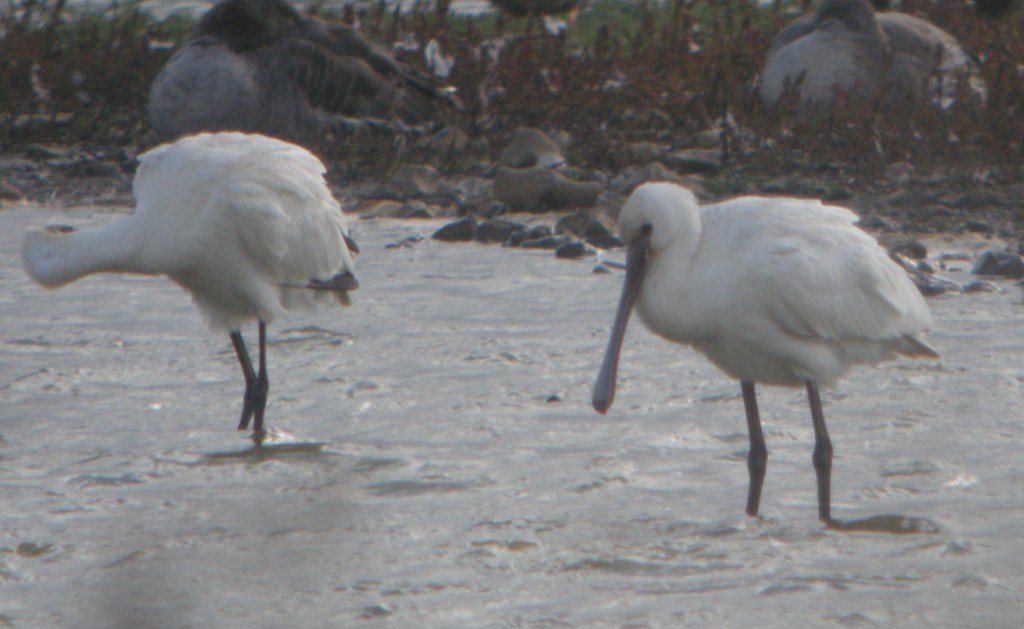
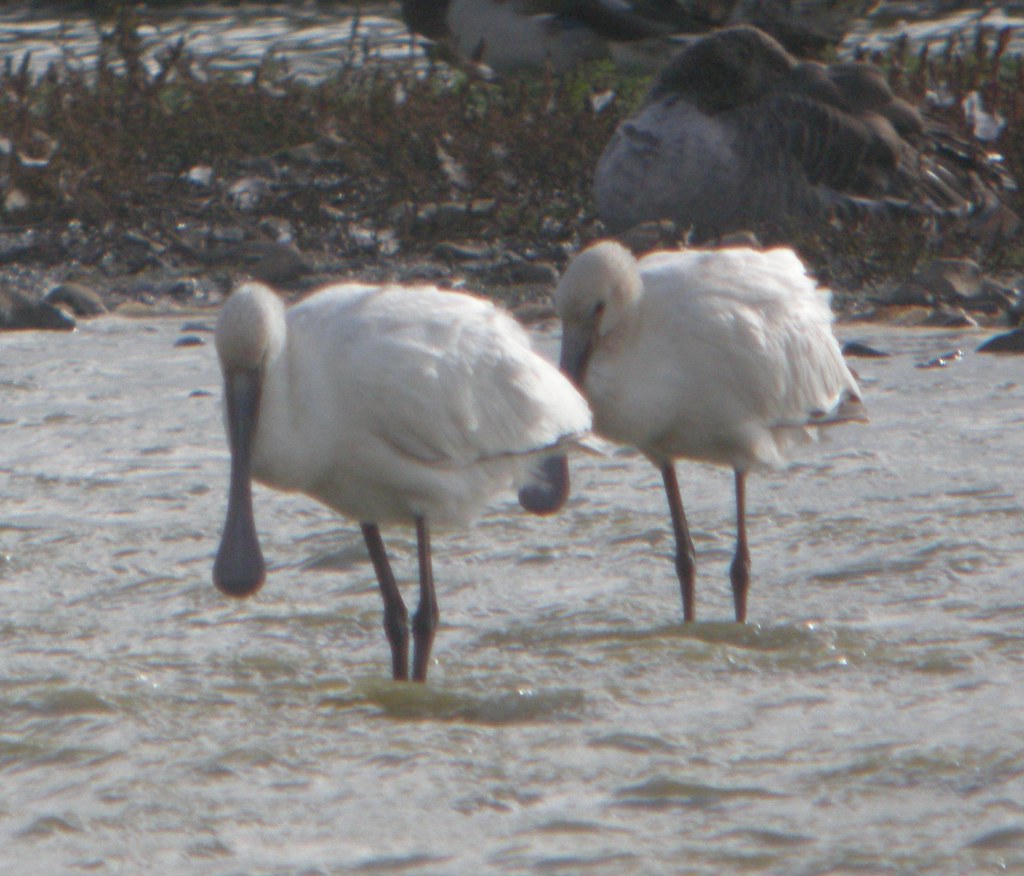
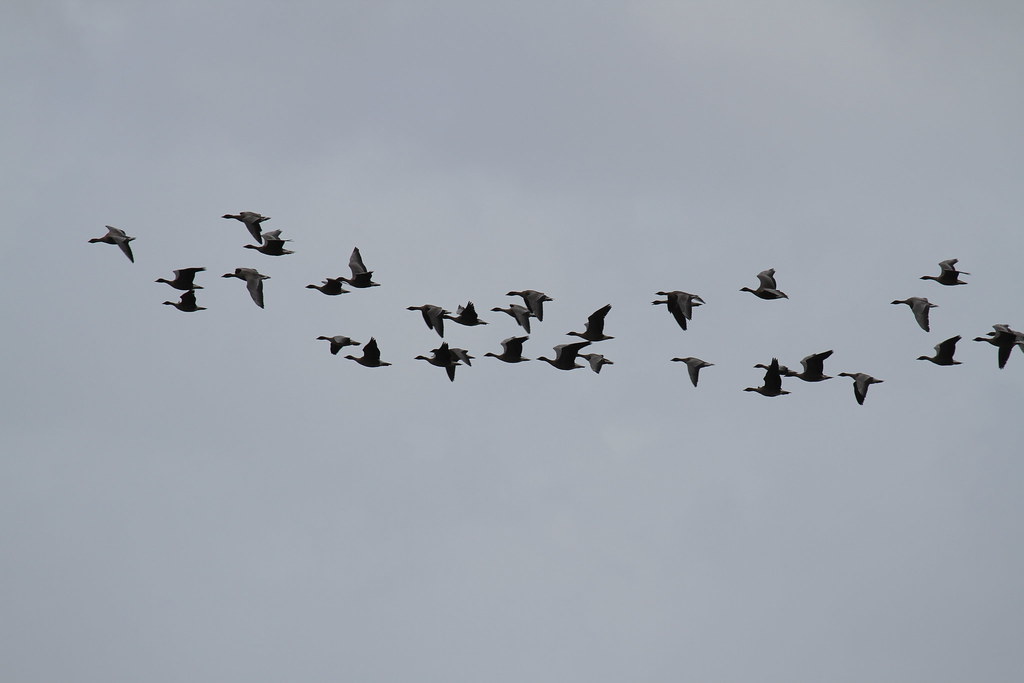
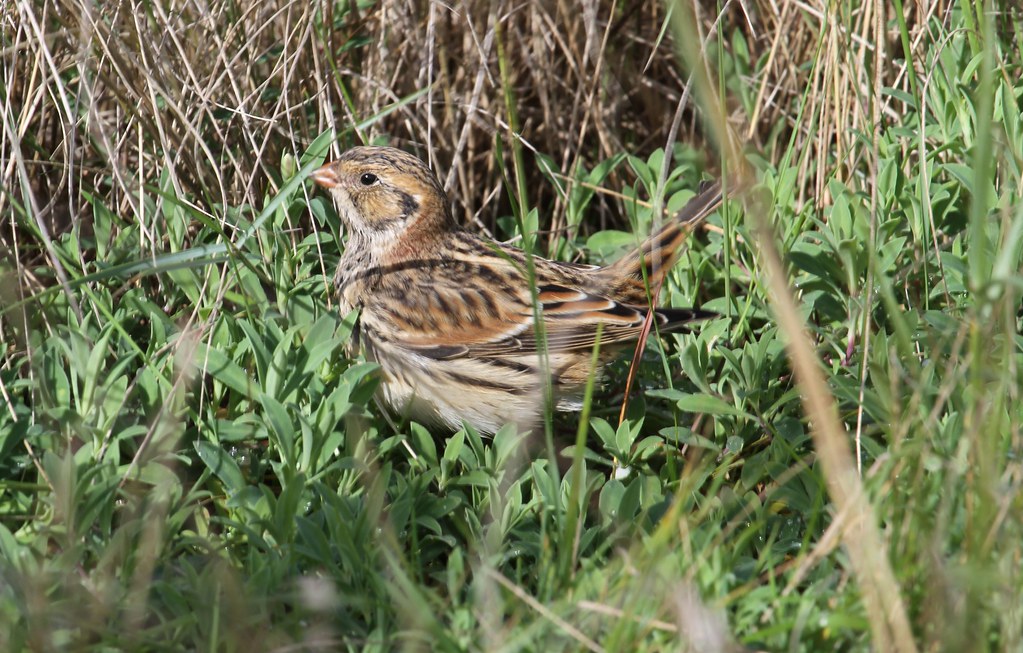
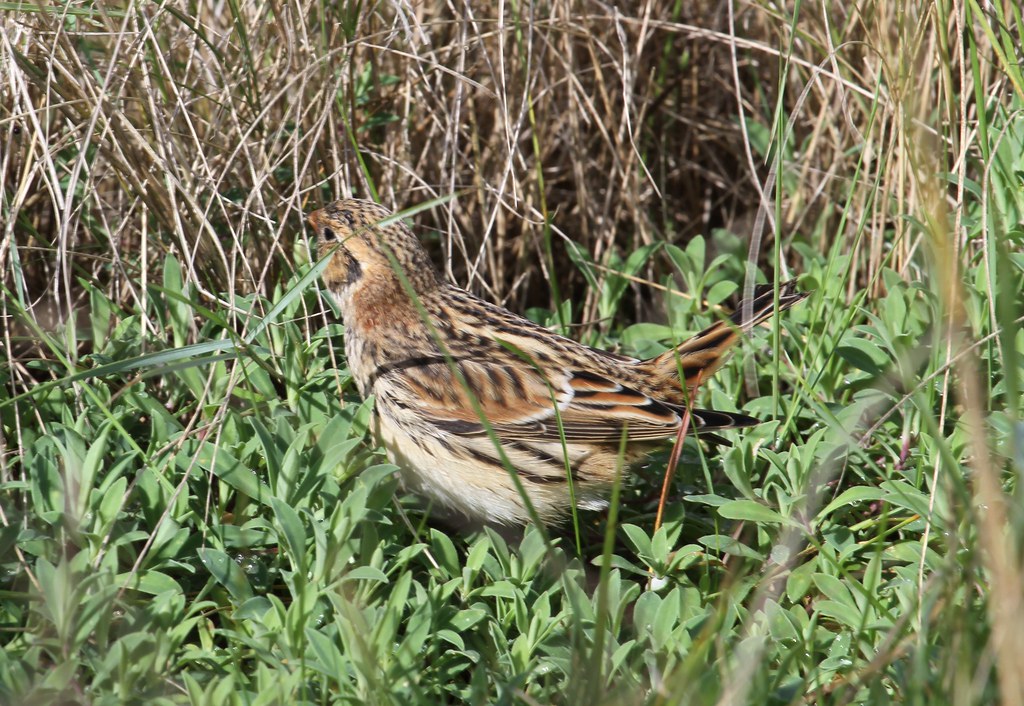
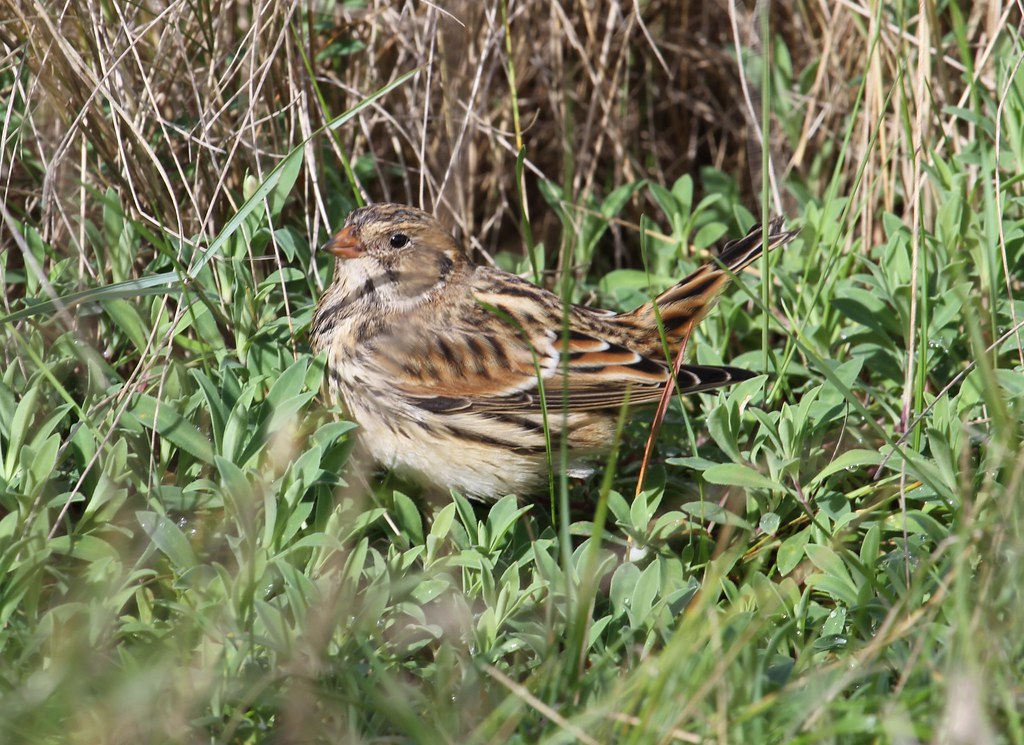
I was heading south from Holt, intending to catch the second-half of Man City v Chelsea, when my pager Mega Alert sprang into action.... Earlier in the day, I'd been birding around Stiffkey. I'd started off at Stiffkey Fen, then to Stiffkey Woods and then went out to the little plantation on Stiffkey Saltmarsh. It hadn't been a bad day. A couple of Spoonbills dropped into the Fen, a rather tame Lapland Bunting allowed me to take some nice photos of it and the first Pink-footed Geese of the autumn had returned to Norfolk. But after battling away in the wind and rain and not seeing a single passage migrant, I decided to cut my losses, nothing was going to show it's face in this weather....
Eurasian Spoonbill
Eurasian Spoonbill
Pink-footed Geese in flight.
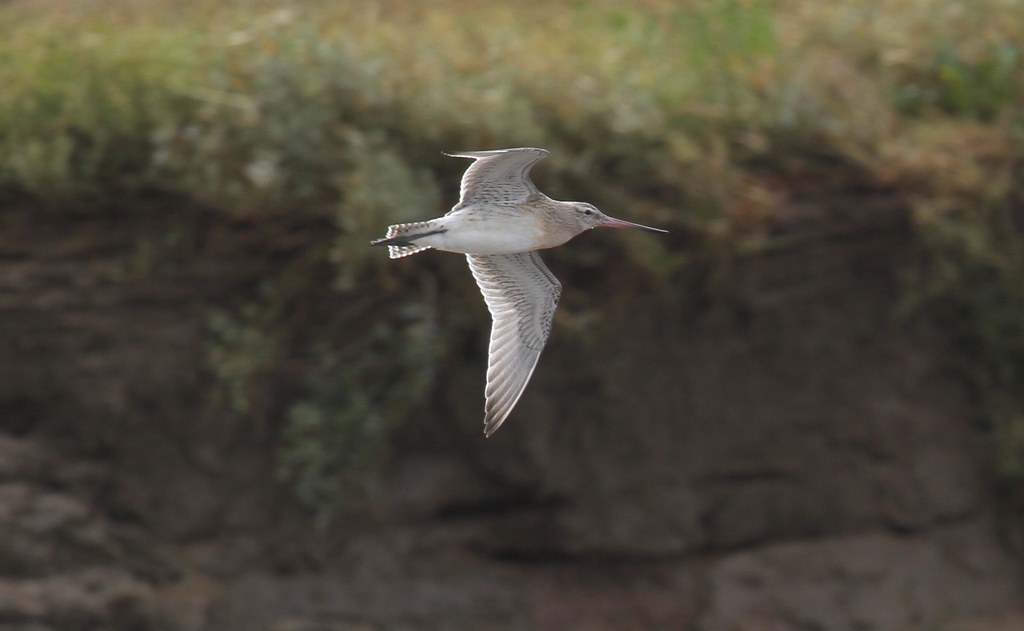
Bar-tailed Godwit
Lapland Bunting
Lapland Bunting
Lapland Bunting
I picked up my pager and glanced down at the message. It's not what you should be doing when driving, but the message that met my gaze almost made me crash the car. I pulled over to double check I'd read the message right "MEGA Norfolk Empidonax flycatcher (probably Alder, Willow or Least) Blakeney Point in Plantation at 1.05pm. Approach with caution"!!!! Reverse, break, first gear, wheel-spin, away.... 20 minutes later I was geared up in my waterproofs starting the arduous 3 mile trek into a raging wet North-westerly in order to get to 'The Point'. 1 hour and 10 minutes later I arrived and after a rather nervous wait, the Empid put in a brief appearance. It showed briefly on and off for the next 3 hours that I watch it. The pager was carrying the bird as Yellow-bellied Flycatcher, but I wasn't really convinced about that and discussed the ID with a few locals. (It now appears that my scepticism was well founded and that the bird is an Alder Flycatcher).
Here's some naff video of it.
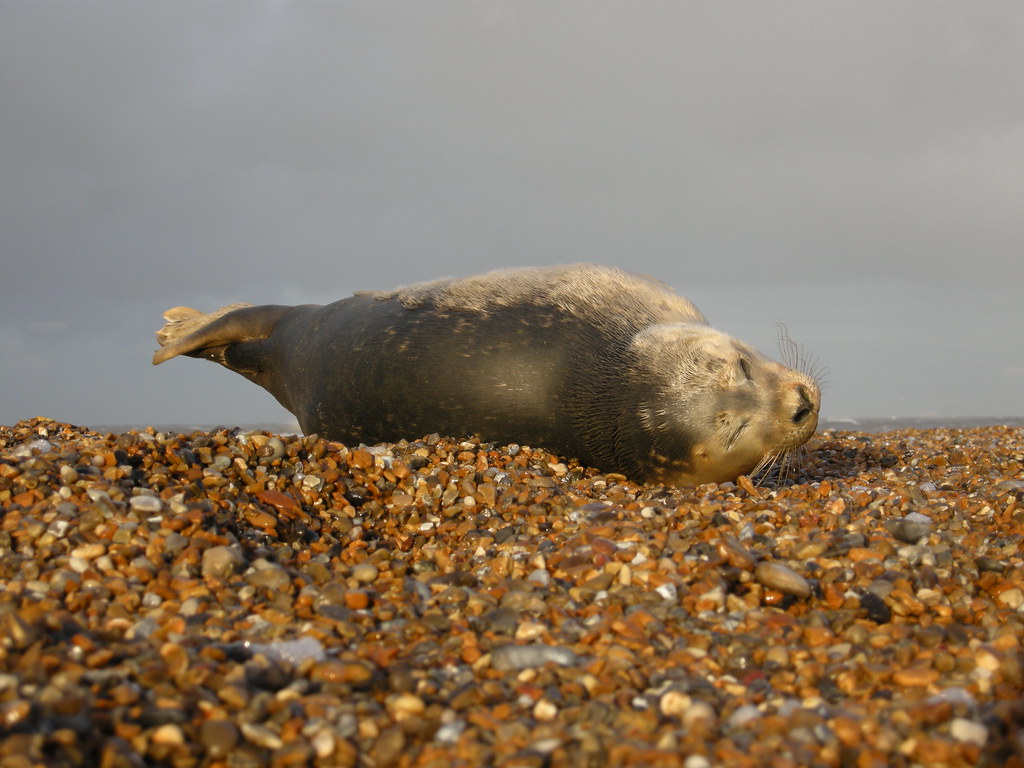
This rather cute little Grey Seal pup was sheltering on the beach on the way back
Grey Seal pup
Grey Seal pup
26 Sep 2010, Waxham
I only popped out for the afternoon, but the wind had subsided considerably from yesterday and a few hours around Waxham finally paid dividends when I heard a Yellow-browed Warbler give a short call and found the bird feeding in some sycamores just north of Shangri-la Cottage. It's a bit out of focus, but you tell what it is.
Yellow-browed Warbler
27 Sep 2010, Waxham
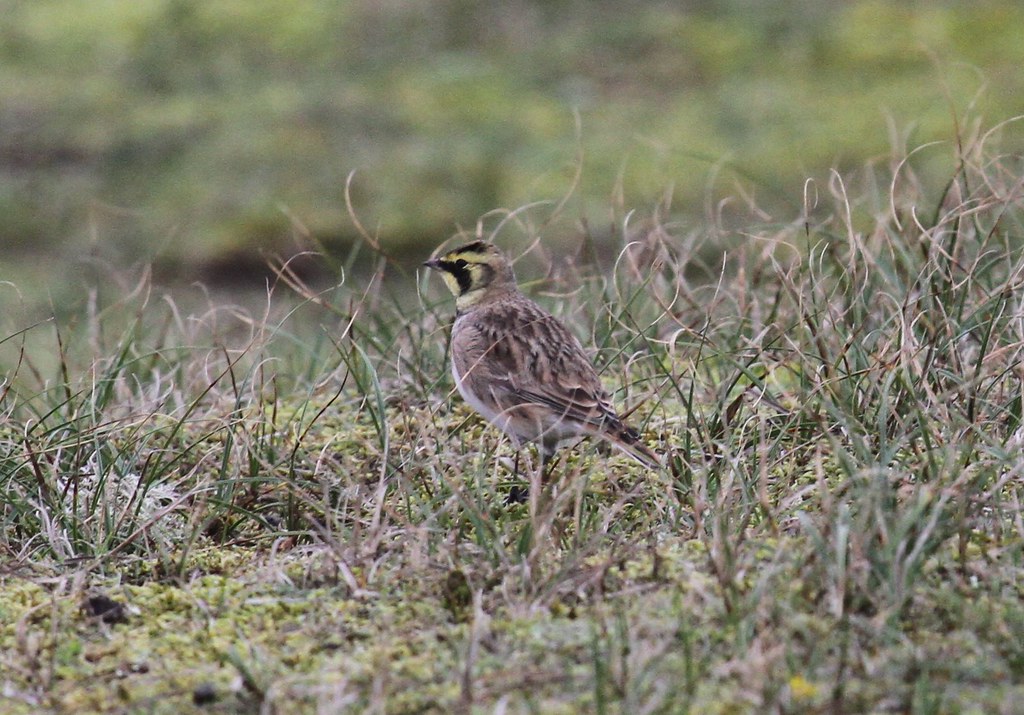
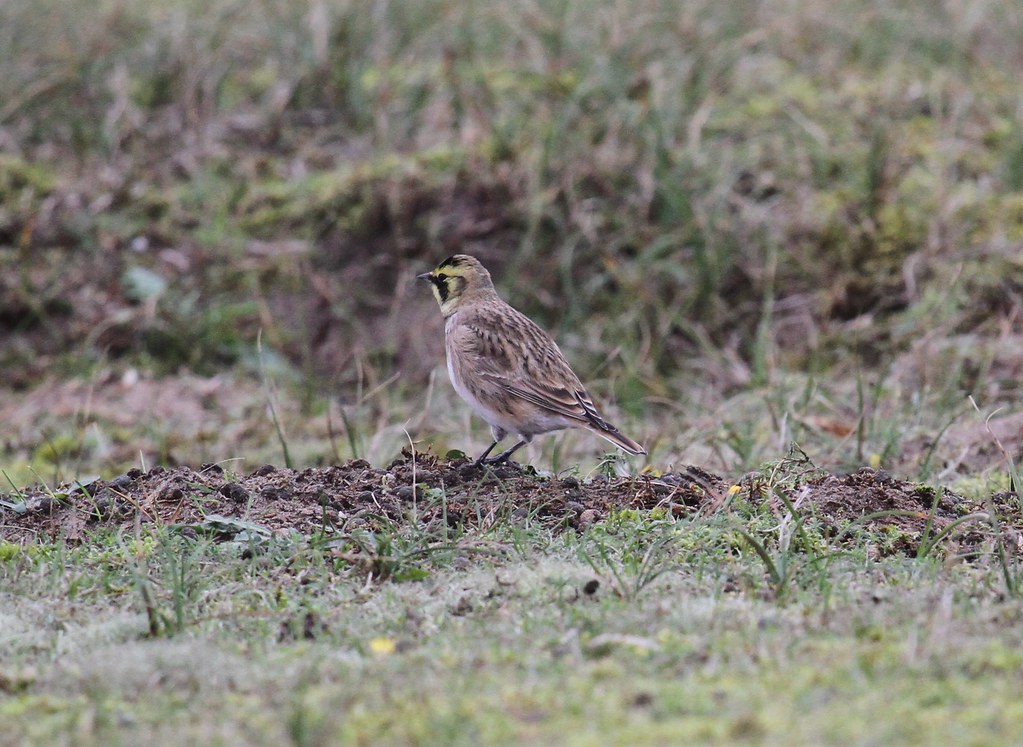
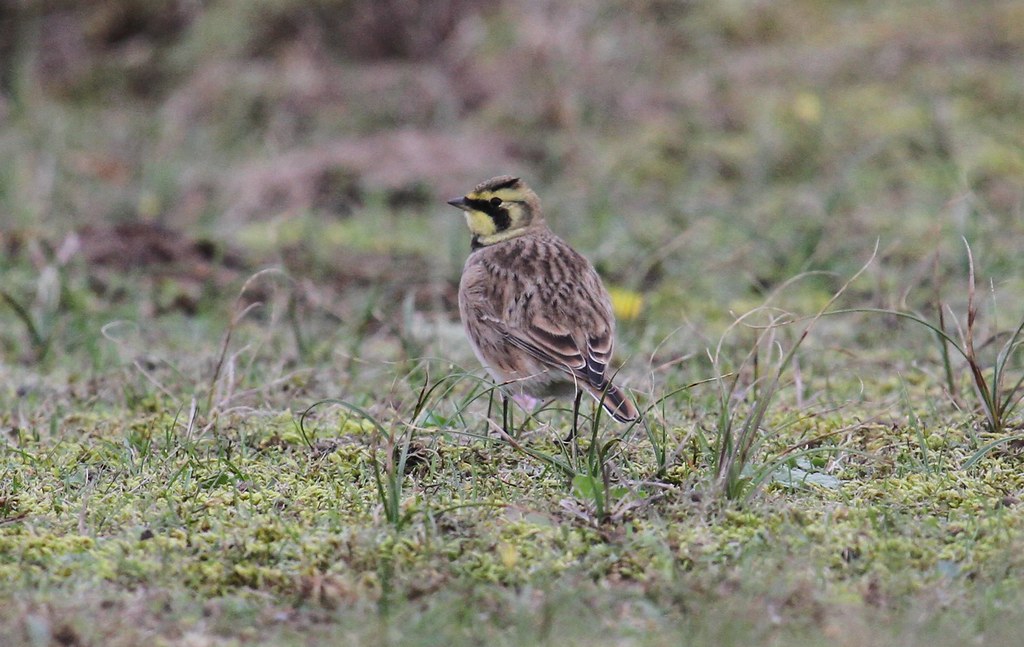
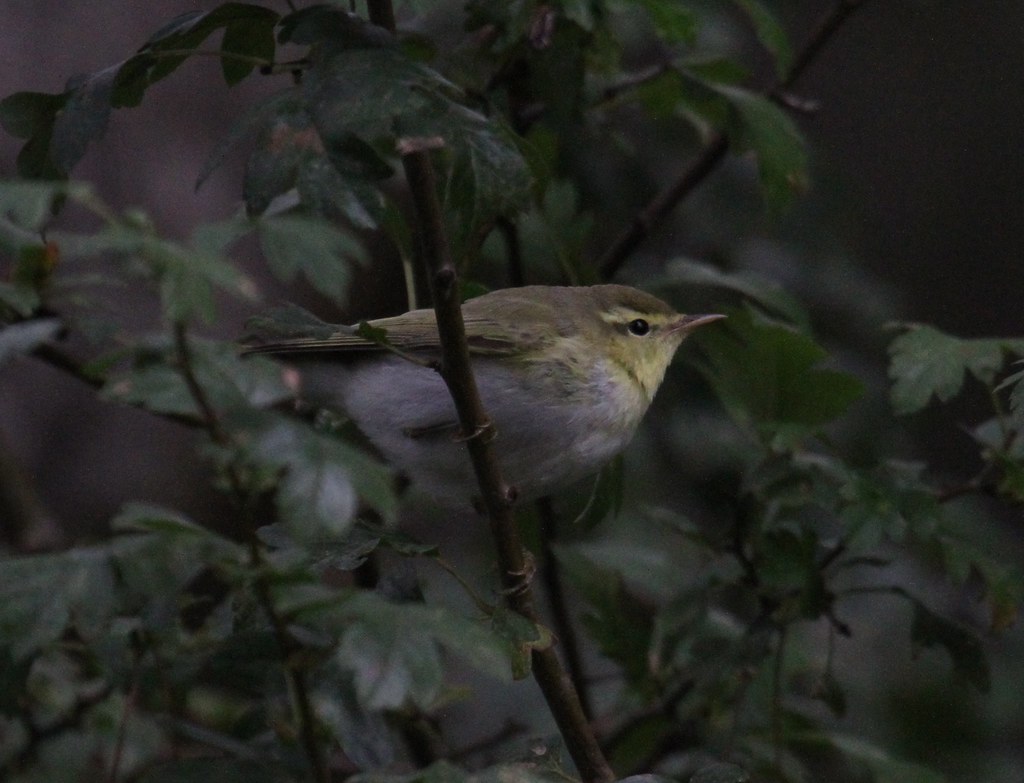
The wind was north-easterly today, so I started out at Wells Wood, looking for yesterday's Western Bonelli's Warbler. The bird didn't show, but it was obvious there were lots of birds on the move; Ring Ouzels, Brambling, Siskin, Pied Flycatchers, and loads of Song Thrushes and Redwing were flying around. I decided to head off to Burnham Overy Dunes to see what migrants were around. I spent 6 hours in the dunes and the west side of Holkham Pines and saw lots of birds, but not the 'biggy' I was hoping for. Shorelark and Wood Warbler were the best birds of the day, but 7 Ring Ouzels, 6+ Redstarts, 40 Chiffchaff, 10 Willow Warblers, 5+ Garden Warblers, Lesser Whitethroat, and Northern Wheatears were all nice to see, but the most amazing thing was the amount of thrushes. I estimated at least 2000 Song Thrush, 150 Redwing and about 200 Robins. I hardly remember a second when there wasn't a Song Thrush within a few metres.
Shorelark, Burnham Overy Dunes
Shorelark, Burnham Overy Dunes
Shorelark, Burnham Overy Dunes
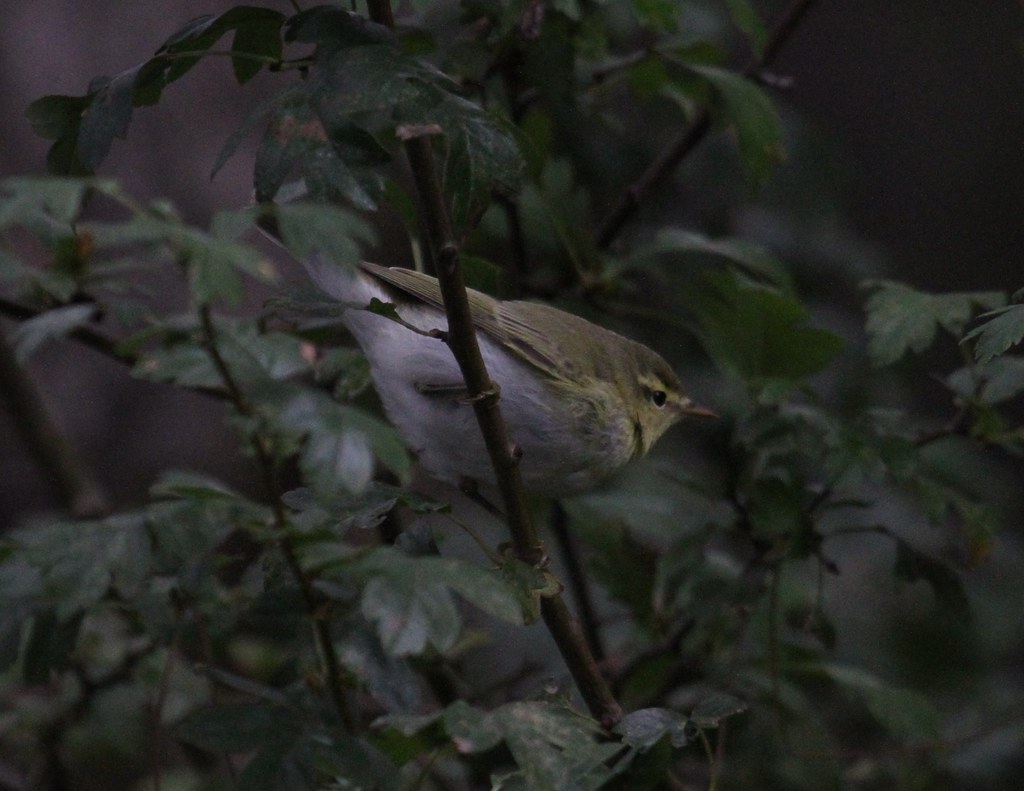
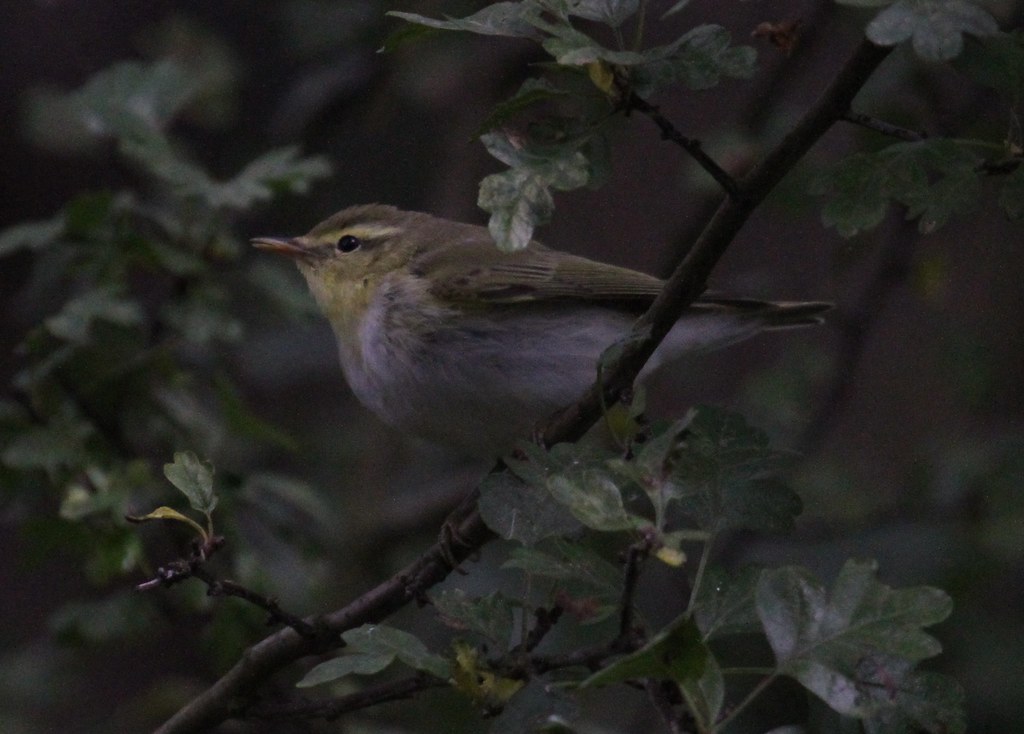
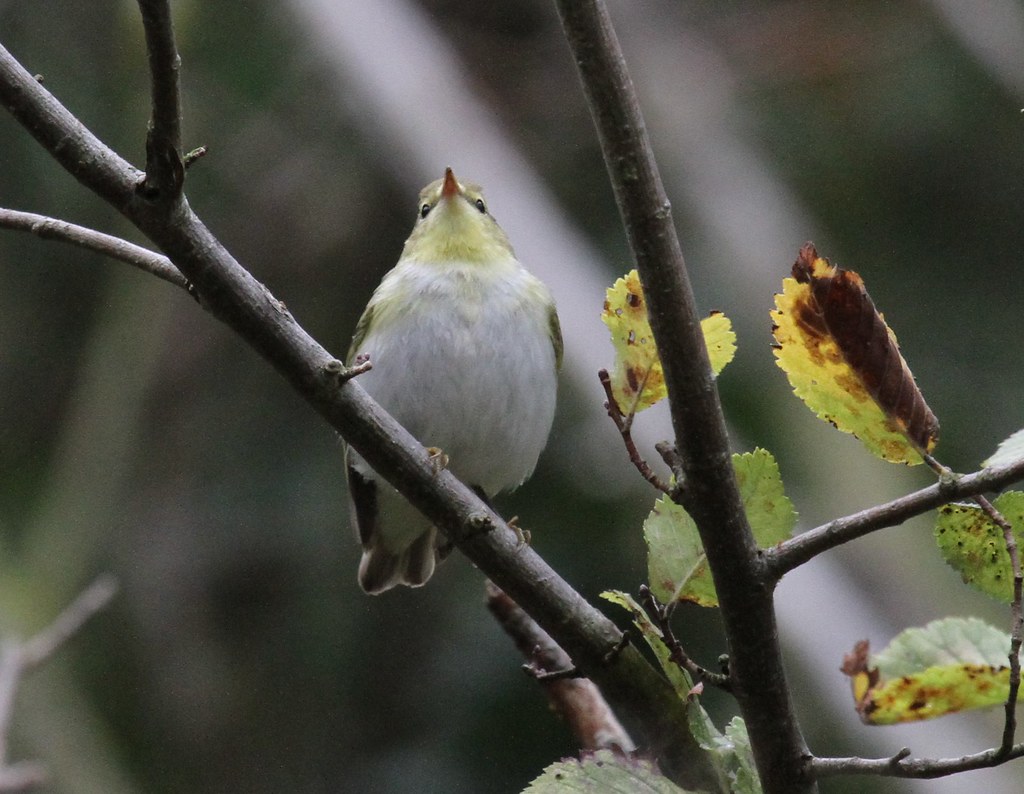
Wood Warbler, Holkham Pines
Wood Warbler, Holkham Pines
Wood Warbler, Holkham Pines
Wood Warbler, Holkham Pines
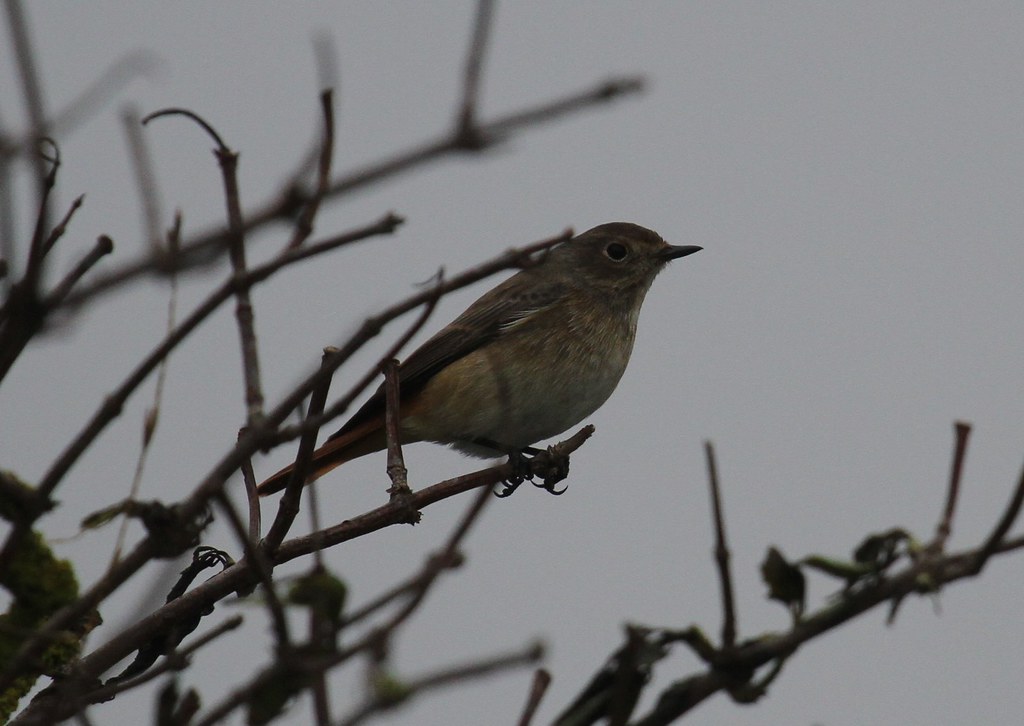
Redstart, Burnham Overy Dunes
Redstart, Burnham Overy Dunes
Garden Warbler, Burnham Overy Dunes
Garden Warbler, Burnham Overy Dunes
Blackcap, Burnham Overy Dunes
Northern Wheatear, Burnham Overy Dunes
And just to show it's not ALL about the migrants...
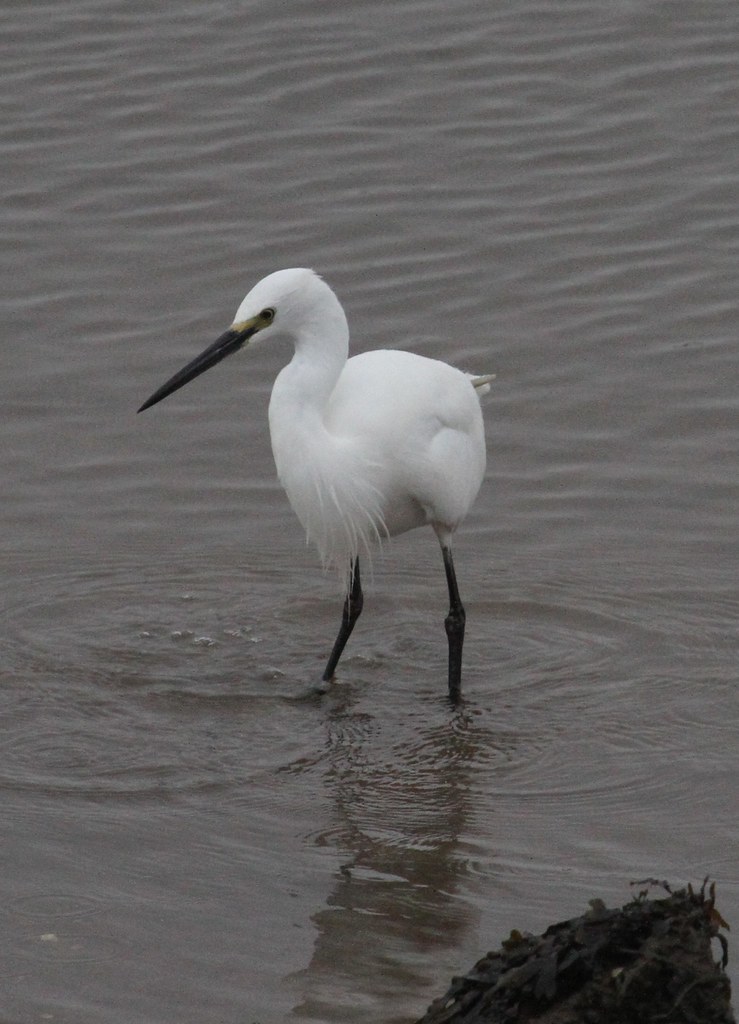
Little Egret, Burnham Overy Staithe
25 Sep 2010, Stiffkey and Blakeney
I was heading south from Holt, intending to catch the second-half of Man City v Chelsea, when my pager Mega Alert sprang into action.... Earlier in the day, I'd been birding around Stiffkey. I'd started off at Stiffkey Fen, then to Stiffkey Woods and then went out to the little plantation on Stiffkey Saltmarsh. It hadn't been a bad day. A couple of Spoonbills dropped into the Fen, a rather tame Lapland Bunting allowed me to take some nice photos of it and the first Pink-footed Geese of the autumn had returned to Norfolk. But after battling away in the wind and rain and not seeing a single passage migrant, I decided to cut my losses, nothing was going to show it's face in this weather....
Eurasian Spoonbill
Eurasian Spoonbill
Pink-footed Geese in flight.
Bar-tailed Godwit
Lapland Bunting
Lapland Bunting
Lapland Bunting
I picked up my pager and glanced down at the message. It's not what you should be doing when driving, but the message that met my gaze almost made me crash the car. I pulled over to double check I'd read the message right "MEGA Norfolk Empidonax flycatcher (probably Alder, Willow or Least) Blakeney Point in Plantation at 1.05pm. Approach with caution"!!!! Reverse, break, first gear, wheel-spin, away.... 20 minutes later I was geared up in my waterproofs starting the arduous 3 mile trek into a raging wet North-westerly in order to get to 'The Point'. 1 hour and 10 minutes later I arrived and after a rather nervous wait, the Empid put in a brief appearance. It showed briefly on and off for the next 3 hours that I watch it. The pager was carrying the bird as Yellow-bellied Flycatcher, but I wasn't really convinced about that and discussed the ID with a few locals. (It now appears that my scepticism was well founded and that the bird is an Alder Flycatcher).
Here's some naff video of it.
This rather cute little Grey Seal pup was sheltering on the beach on the way back
Grey Seal pup
Grey Seal pup
26 Sep 2010, Waxham
I only popped out for the afternoon, but the wind had subsided considerably from yesterday and a few hours around Waxham finally paid dividends when I heard a Yellow-browed Warbler give a short call and found the bird feeding in some sycamores just north of Shangri-la Cottage. It's a bit out of focus, but you tell what it is.
Yellow-browed Warbler
27 Sep 2010, Waxham
The wind was north-easterly today, so I started out at Wells Wood, looking for yesterday's Western Bonelli's Warbler. The bird didn't show, but it was obvious there were lots of birds on the move; Ring Ouzels, Brambling, Siskin, Pied Flycatchers, and loads of Song Thrushes and Redwing were flying around. I decided to head off to Burnham Overy Dunes to see what migrants were around. I spent 6 hours in the dunes and the west side of Holkham Pines and saw lots of birds, but not the 'biggy' I was hoping for. Shorelark and Wood Warbler were the best birds of the day, but 7 Ring Ouzels, 6+ Redstarts, 40 Chiffchaff, 10 Willow Warblers, 5+ Garden Warblers, Lesser Whitethroat, and Northern Wheatears were all nice to see, but the most amazing thing was the amount of thrushes. I estimated at least 2000 Song Thrush, 150 Redwing and about 200 Robins. I hardly remember a second when there wasn't a Song Thrush within a few metres.
Shorelark, Burnham Overy Dunes
Shorelark, Burnham Overy Dunes
Shorelark, Burnham Overy Dunes
Wood Warbler, Holkham Pines
Wood Warbler, Holkham Pines
Wood Warbler, Holkham Pines
Wood Warbler, Holkham Pines
Redstart, Burnham Overy Dunes
Redstart, Burnham Overy Dunes
Garden Warbler, Burnham Overy Dunes
Garden Warbler, Burnham Overy Dunes
Blackcap, Burnham Overy Dunes
Northern Wheatear, Burnham Overy Dunes
And just to show it's not ALL about the migrants...
I stepped outside of the kitchen door and my eyes were immediately drawn to the sky, to the Sparrowhawk soaring on the wind, searching for prey. Although my eyes are not good and I found myself to be without my specs, the light seemed to shine in such a way as to make visible the light brown colours on the underside of the bird.
This airborne hunter, hungry for a meal, drew overlapping circles
I stepped outside of the kitchen door and my eyes were immediately drawn to the sky, to the Sparrowhawk soaring on the wind, searching for prey. Although my eyes are not good and I found myself to be without my specs, the light seemed to shine in such a way as to make visible the light brown colours on the underside of the bird.
This airborne hunter, hungry for a meal, drew overlapping circles
One of the Monk Vulture chicks born in Portugal being held by the Portuguese wildlife officer Carlos Pacheco (collaborator in some of SEO/BirdLife’s projects in Cáceres) At last, after years of expectation, the Extremadura Monk Vulture colony in Tajo Internacional has decided to cross the border and start breeding in Portugal. This Cáceres colony of about 60 established pairs of Monk Vulture (also known as Cinereous Vulture and Black Vulture) has been nesting for some time at the end of the valley called Valle del Salor, within the "Tajo Internacional" Nature Park. Although birds from the colony often wandered into Portugal, they never actually nested in the neighbouring country, where the species was considered to be extinct as a breeder [although the media claim that the Monk Vulture had not bred in Portugal for 40 years, according to Infante (2004) there have been two confirmed cases of breeding, one in 1994 and the other in 2003]. All previous Portuguese attempts to expand the colony into their country, for example by installing artificial nests, had failed up to now. But it’s never too late...., in 2010 came the excellent news of three breeding territories being taken up on the Portuguese side of the border, two of which produced young. But the birds were beset by problems. The first pair failed when the nest fell at the start of incubation. Chicks hatched in the other two nests, in Holm Oaks, but they were blown down by gales in June and the chicks fell to the ground, where they were hastily rescued. One was in a critical state and needed intensive care in a specialist centre. Both chicks, baptised Aramil and Tajo, were then returned to their territories, duly marked with radio transmitters. Two artificial nests were built for that purpose, in the exact place where the original nests had fallen. There they completed their normal development. These three Portuguese pairs are very likely to have come from Extremadura.
Gala, the first Monk Vulture chick born in the Pyrenees for one hundred years, rests in her nest with a transmitter fitted to her back.
Good news involving Monk Vultures of Extremadura origin also came from the Catalan Pyrenees, where the species has bred for the first time in a century. In this case the "colonisation" needed human help, in the form of the successful reintroduction project begun in 2007. Between 2007 and 2009 a total of 27 birds bred in captivity in rehabilitation centres were released in the area, many coming from the "Los Hornos" rehabilitation centre in Cáceres. As at June 2010 14 birds remained in the release area (Boumort and Alinya in the Pyrenees of Lleida), 3 are in dispersal and 10 others have been found dead or have disappeared. In 2010 three mature pairs bonded. One of them involves two birds from Extremadura: Perla (a 7-year-old female released in 2007) and Portell (a 4-year old male released in 2007); this pair has built a nest and successfully reared a female chick called Gala, who took her maiden flight on 24 September. Another prime aim of the project was to create a nexus between the French and Iberian populations and this is also proving successful because French Monk Vultures and others from southwest Iberia are regularly being seen in the area. The released vultures also roam over a wide area covering part of France and nearly the whole of the Iberian Peninsula. Witness Obaga, a female born in captivity in 2009 and released this year; in spring 2010 it mingled with the colonies of Monfragüe and Sierra de San Pedro as well as passing through the East Coast, Cádiz, Sierra Morena, Montes de Toledo and Aragón.
These two success stories are matched by others in France, Mallorca, Bulgaria, Greece, etc, where Monk Vultures from Extremadura are being used in reintroduction or reinforcement projects (see our blog SEO-Cáceres). 1992 saw the start of one of the most successful of these projects in the French Massif Central, where 30 pairs have now settled down, meaning that the French population is now the second biggest in Europe.
Infante, S. (2004). Status and Conservation of the Black Vulture in Portugal. International Symposium on the Black Vulture Aegypius monachus. Córdoba. España.
One of the Monk Vulture chicks born in Portugal being held by the Portuguese wildlife officer Carlos Pacheco (collaborator in some of SEO/BirdLife’s projects in Cáceres) At last, after years of expectation, the Extremadura Monk Vulture colony in Tajo Internacional has decided to cross the border and start breeding in Portugal. This Cáceres colony of about 60 established pairs of Monk Vulture (also known as Cinereous Vulture and Black Vulture) has been nesting for some time at the end of the valley called Valle del Salor, within the "Tajo Internacional" Nature Park. Although birds from the colony often wandered into Portugal, they never actually nested in the neighbouring country, where the species was considered to be extinct as a breeder [although the media claim that the Monk Vulture had not bred in Portugal for 40 years, according to Infante (2004) there have been two confirmed cases of breeding, one in 1994 and the other in 2003]. All previous Portuguese attempts to expand the colony into their country, for example by installing artificial nests, had failed up to now. But it’s never too late...., in 2010 came the excellent news of three breeding territories being taken up on the Portuguese side of the border, two of which produced young. But the birds were beset by problems. The first pair failed when the nest fell at the start of incubation. Chicks hatched in the other two nests, in Holm Oaks, but they were blown down by gales in June and the chicks fell to the ground, where they were hastily rescued. One was in a critical state and needed intensive care in a specialist centre. Both chicks, baptised Aramil and Tajo, were then returned to their territories, duly marked with radio transmitters. Two artificial nests were built for that purpose, in the exact place where the original nests had fallen. There they completed their normal development. These three Portuguese pairs are very likely to have come from Extremadura.
Gala, the first Monk Vulture chick born in the Pyrenees for one hundred years, rests in her nest with a transmitter fitted to her back.
Good news involving Monk Vultures of Extremadura origin also came from the Catalan Pyrenees, where the species has bred for the first time in a century. In this case the "colonisation" needed human help, in the form of the successful reintroduction project begun in 2007. Between 2007 and 2009 a total of 27 birds bred in captivity in rehabilitation centres were released in the area, many coming from the "Los Hornos" rehabilitation centre in Cáceres. As at June 2010 14 birds remained in the release area (Boumort and Alinya in the Pyrenees of Lleida), 3 are in dispersal and 10 others have been found dead or have disappeared. In 2010 three mature pairs bonded. One of them involves two birds from Extremadura: Perla (a 7-year-old female released in 2007) and Portell (a 4-year old male released in 2007); this pair has built a nest and successfully reared a female chick called Gala, who took her maiden flight on 24 September. Another prime aim of the project was to create a nexus between the French and Iberian populations and this is also proving successful because French Monk Vultures and others from southwest Iberia are regularly being seen in the area. The released vultures also roam over a wide area covering part of France and nearly the whole of the Iberian Peninsula. Witness Obaga, a female born in captivity in 2009 and released this year; in spring 2010 it mingled with the colonies of Monfragüe and Sierra de San Pedro as well as passing through the East Coast, Cádiz, Sierra Morena, Montes de Toledo and Aragón.
These two success stories are matched by others in France, Mallorca, Bulgaria, Greece, etc, where Monk Vultures from Extremadura are being used in reintroduction or reinforcement projects (see our blog SEO-Cáceres). 1992 saw the start of one of the most successful of these projects in the French Massif Central, where 30 pairs have now settled down, meaning that the French population is now the second biggest in Europe.
Infante, S. (2004). Status and Conservation of the Black Vulture in Portugal. International Symposium on the Black Vulture Aegypius monachus. Córdoba. España.