Pages

Red-footed Falcon at Lakenheath

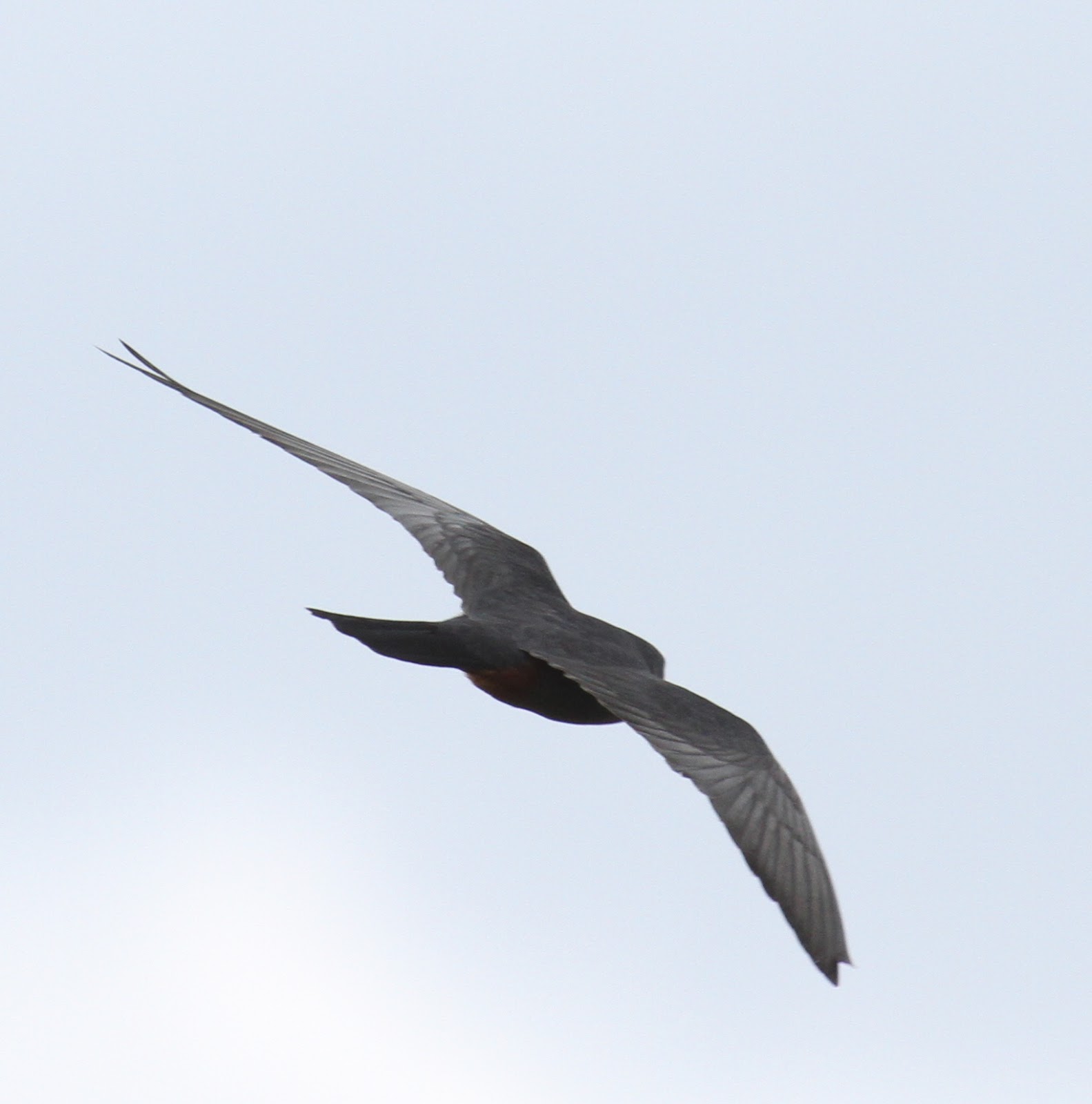
We had our work retreat at Elvesden Forest CentrerParcs on 8-9 May and the first afternoon was free-time so I headed off to Lakenheath Fen RSPB where I was treated to lovely views of the adult male Red-footed Falcon. It was feeding at the far end of Joist Fen, where it hawked for insects with about 15 Hobbies. It could be picked out relatively easy by the silvery primaries, but it also had a slightly more stockier body and head and a wider base to the wings.
Adult male Red-footed Falcon

Adult male Red-footed Falcon

Adult male Red-footed Falcon

Adult male Red-footed Falcon

Adult male Red-footed Falcon

Adult male Red-footed Falcon

Adult male Red-footed Falcon

Adult male Red-footed Falcon

Adult male Red-footed Falcon

There were also a few other good birds around; 3 booming Bitterns, Common Crane (see below), Cuckoo and lots of Swifts.


Common Crane

Common Crane
We had our work retreat at Elvesden Forest CentrerParcs on 8-9 May and the first afternoon was free-time so I headed off to Lakenheath Fen RSPB where I was treated to lovely views of the adult male Red-footed Falcon. It was feeding at the far end of Joist Fen, where it hawked for insects with about 15 Hobbies. It could be picked out relatively easy by the silvery primaries, but it also had a slightly more stockier body and head and a wider base to the wings.
Adult male Red-footed Falcon

Adult male Red-footed Falcon

Adult male Red-footed Falcon

Adult male Red-footed Falcon

Adult male Red-footed Falcon

Adult male Red-footed Falcon

Adult male Red-footed Falcon

Adult male Red-footed Falcon

Adult male Red-footed Falcon

There were also a few other good birds around; 3 booming Bitterns, Common Crane (see below), Cuckoo and lots of Swifts.


Common Crane

Common Crane
reade more... Résuméabuiyad

Wordless Wednesday Woodpigeons


reade more... Résuméabuiyad

FIRST HERRING GULL IN EXTREMADURA


An individual in first winter plumage Herring Gull (Larus argentatus) was seen on 10th April 2013 at Guareña (Badajoz) by Marc Gálvez. On subsequent visits there it was not re-located. This is the first confirmed record of this species in Extremadura, based on current taxonomy, given that it one reads the literature of more than twenty years ago, it was described as a very common species in Spain. The reason for this drastic change in status is due to the splitting into various species the Herring Gull complex. The first split was cachinnans (the Yellow-legged Gull) from argentatus (the name retained by Herring Gull), the latter breeding in central and northern Europe. A later split was to establish michahellis (the current Yellow-legged Gull) which breeds in south-west Europe) from cachinnans (Caspian Gull, from south-east Europe).

The situation in Spain and Extremadura of these three species is the following:
  • Yellow-legged Gull (Larus michahellis). Abundant resident throughout the Iberian coast, Balearics and Canaries. In Extremadura it is a scarce species with a few pairs breeding irregularly at Valdecañas reservoir (Cáceres) since at least 2002. During the rest of the year, individuals are found across the territory, with records in every month, being rather more frequent in spring (April) and autumn (October).
  • Herring Gull (Larus argentatus). Basically a scarce winter visitor on the coast (several hundred), especially on the north of the peninsula. There are inland records at sites where gulls are studied (e.g. rubbish dumps in Madrid and La Mancha), so its presence, now confirmed, has been suspected in Extremadura. In general, these records are of immature birds passing unnoticed amongst other more common species.
  • Caspian Gull (Larus cachinnans). A rarity in Spain. Owing to identification difficulties, until 2011 there were no accepted records and thus its season pattern or distribution have not been analysed. In principle, it would appear more often in winter and on the coast, although there are some inland records, but none in Extremadura, although one will probably turn up.
El presente registro de gaviota argéntea ha sido antes publicado por Marc Gálvez y José Guerra en su blog personal “Pajareando en Badajoz”. En esta primavera húmeda y fría se han detectado en arrozales de las vegas del Guadiana concentraciones de gaviotas atípicas para las fechas. Ya se comentó la segunda cita extremeña de gaviota de Delaware (Larus delawarensis) y durante la observación de la gaviota argéntea se vieron también gaviotas sombrías (Larus fuscus), reidoras (Chroicocephalus ridibundus), canas (L. canus -foto 1-), patiamarillas (L. michahellis –foto 2, junto a sombrías y reidoras-) y cabecinegras (L. melanocephalus –foto 3-). Todas las fotografías por Marc Gálvez.

This record of Herring Gull has been published earlier by Marc Gálvez and José Guerra in their personal blog “Pajareando en Badajoz”. In the wet and cold spring of 2013, concentrations of gulls atypical for the season were found in the rice fields of the Guadiana. We have previously cited the second record for Extremadura of Ring-billed Gull (Larus delawarensis) and during the observation of the Herring Gull there were also present Lesser Black-backed Gulls (Larus fuscus), Black-headed (Chroicocephalus ridibundus), Common (L. canus – photo 1), Yellow-legged (L. michahellis – photo 2, next to Lesser Black-backed and Black-headed) and Mediterranean (L. melanocephalus – photo 3). All the photos are by Marc Gálvez.

Translated by Martin Kelsey.


An individual in first winter plumage Herring Gull (Larus argentatus) was seen on 10th April 2013 at Guareña (Badajoz) by Marc Gálvez. On subsequent visits there it was not re-located. This is the first confirmed record of this species in Extremadura, based on current taxonomy, given that it one reads the literature of more than twenty years ago, it was described as a very common species in Spain. The reason for this drastic change in status is due to the splitting into various species the Herring Gull complex. The first split was cachinnans (the Yellow-legged Gull) from argentatus (the name retained by Herring Gull), the latter breeding in central and northern Europe. A later split was to establish michahellis (the current Yellow-legged Gull) which breeds in south-west Europe) from cachinnans (Caspian Gull, from south-east Europe).

The situation in Spain and Extremadura of these three species is the following:
  • Yellow-legged Gull (Larus michahellis). Abundant resident throughout the Iberian coast, Balearics and Canaries. In Extremadura it is a scarce species with a few pairs breeding irregularly at Valdecañas reservoir (Cáceres) since at least 2002. During the rest of the year, individuals are found across the territory, with records in every month, being rather more frequent in spring (April) and autumn (October).
  • Herring Gull (Larus argentatus). Basically a scarce winter visitor on the coast (several hundred), especially on the north of the peninsula. There are inland records at sites where gulls are studied (e.g. rubbish dumps in Madrid and La Mancha), so its presence, now confirmed, has been suspected in Extremadura. In general, these records are of immature birds passing unnoticed amongst other more common species.
  • Caspian Gull (Larus cachinnans). A rarity in Spain. Owing to identification difficulties, until 2011 there were no accepted records and thus its season pattern or distribution have not been analysed. In principle, it would appear more often in winter and on the coast, although there are some inland records, but none in Extremadura, although one will probably turn up.
El presente registro de gaviota argéntea ha sido antes publicado por Marc Gálvez y José Guerra en su blog personal “Pajareando en Badajoz”. En esta primavera húmeda y fría se han detectado en arrozales de las vegas del Guadiana concentraciones de gaviotas atípicas para las fechas. Ya se comentó la segunda cita extremeña de gaviota de Delaware (Larus delawarensis) y durante la observación de la gaviota argéntea se vieron también gaviotas sombrías (Larus fuscus), reidoras (Chroicocephalus ridibundus), canas (L. canus -foto 1-), patiamarillas (L. michahellis –foto 2, junto a sombrías y reidoras-) y cabecinegras (L. melanocephalus –foto 3-). Todas las fotografías por Marc Gálvez.

This record of Herring Gull has been published earlier by Marc Gálvez and José Guerra in their personal blog “Pajareando en Badajoz”. In the wet and cold spring of 2013, concentrations of gulls atypical for the season were found in the rice fields of the Guadiana. We have previously cited the second record for Extremadura of Ring-billed Gull (Larus delawarensis) and during the observation of the Herring Gull there were also present Lesser Black-backed Gulls (Larus fuscus), Black-headed (Chroicocephalus ridibundus), Common (L. canus – photo 1), Yellow-legged (L. michahellis – photo 2, next to Lesser Black-backed and Black-headed) and Mediterranean (L. melanocephalus – photo 3). All the photos are by Marc Gálvez.

Translated by Martin Kelsey.


reade more... Résuméabuiyad

….AND ALSO THE FIRST RED-THROATED PIPIT

Marc Gálvez and José Guerra do not fail to surprise us, as you can read in the earlier posting son the Ring-billed Gull and the Herring Gull. Just a few days after Marc found the first Herring Gull for Extremadura, and at the same site, José found the first Red-throated Pipit (Anthus cervinus) recorded in the region. A male was seen on 25th April 2013 at Guareña (Badajoz). Soon afterwards Marc also observed it. And on 27th April, probably the same bird was found by José Gómez Aparicio, and also seen by Eva Palacios (photo), Sergio Mayordomo, Francisco Montaño, Lorenzo Alcántara, Vicky Resa, Esther, Isaac, Marc Gálvez and José Guerra. To complete the treats, on 25th a Spotted Crake (Porzana porzana) was also found in the area and on 27th a Scandinavian Yellow Wagtail (Motacilla flava thumbergi).

Although this pipit is unmistakeable in breeding plumage with its reddish breast and throat in both sexes, up until now it had never been recorded in Extremadura. It breeds in the Arctic tundra, from Norway to Alaska, wintering in Africa and South Asia, crossing Eurasia on migration. Spain lies on the margin of its migration route, and it is infrequently seen although not classed as a rarity. Most records are from spring (March to May, especially April), when perhaps the passage is heaviest, although it is most readily identifiable then and also other pipits will be scarce or absent. Autumn records are much rarer and in recent years there have been some over-wintering records. The species is a rare but regular over-wintering bird in Italy and Greece, with more wintering in north-east Africa. As with other migratory birds, most records are from the Mediterranean coast of Spain, and it is very rare indeed in the west and centre of the peninsula.

Translated by Martin Kelsey.
Marc Gálvez and José Guerra do not fail to surprise us, as you can read in the earlier posting son the Ring-billed Gull and the Herring Gull. Just a few days after Marc found the first Herring Gull for Extremadura, and at the same site, José found the first Red-throated Pipit (Anthus cervinus) recorded in the region. A male was seen on 25th April 2013 at Guareña (Badajoz). Soon afterwards Marc also observed it. And on 27th April, probably the same bird was found by José Gómez Aparicio, and also seen by Eva Palacios (photo), Sergio Mayordomo, Francisco Montaño, Lorenzo Alcántara, Vicky Resa, Esther, Isaac, Marc Gálvez and José Guerra. To complete the treats, on 25th a Spotted Crake (Porzana porzana) was also found in the area and on 27th a Scandinavian Yellow Wagtail (Motacilla flava thumbergi).

Although this pipit is unmistakeable in breeding plumage with its reddish breast and throat in both sexes, up until now it had never been recorded in Extremadura. It breeds in the Arctic tundra, from Norway to Alaska, wintering in Africa and South Asia, crossing Eurasia on migration. Spain lies on the margin of its migration route, and it is infrequently seen although not classed as a rarity. Most records are from spring (March to May, especially April), when perhaps the passage is heaviest, although it is most readily identifiable then and also other pipits will be scarce or absent. Autumn records are much rarer and in recent years there have been some over-wintering records. The species is a rare but regular over-wintering bird in Italy and Greece, with more wintering in north-east Africa. As with other migratory birds, most records are from the Mediterranean coast of Spain, and it is very rare indeed in the west and centre of the peninsula.

Translated by Martin Kelsey.
reade more... Résuméabuiyad

Goldfinch Pictures


Here are a few more Pictures of the Goldfinch that I managed to snap while he was collecting nesting material. I know they are not good from a photographic point of view, but I could only get the range using the 10x zoom on my video camera and using the stills facility. I wanted to capture the Goldfinches from an interest point of view and to have a record of their activity in the garden.


One

Here are a few more Pictures of the Goldfinch that I managed to snap while he was collecting nesting material. I know they are not good from a photographic point of view, but I could only get the range using the 10x zoom on my video camera and using the stills facility. I wanted to capture the Goldfinches from an interest point of view and to have a record of their activity in the garden.


One
reade more... Résuméabuiyad

Oooops...

It seems that in updating to a new email address yesterday and deleting my old blogger account, I also deleted every single photo on the blog...

Will take me a while to replace everything, so for a while all the blog archives may just be text reports. I don't think I will get around to fixing this until after the HSC finishes in November.

Cheers,
A Very Annoyed Joshua Bergmark
It seems that in updating to a new email address yesterday and deleting my old blogger account, I also deleted every single photo on the blog...

Will take me a while to replace everything, so for a while all the blog archives may just be text reports. I don't think I will get around to fixing this until after the HSC finishes in November.

Cheers,
A Very Annoyed Joshua Bergmark
reade more... Résuméabuiyad

Wheatears keep on coming

The last 10 days or so have been spent trying to catch Wheatear. Some mornings the ground seemed covered in them. And still they come, another 9 ringed today bringing the total to 80. I am thinking about applying for a colour ring project next year.

Also this week we managed to get a net up at two of the nyger feeder site. 
14 Goldfinch
4 Lesser Redpoll
and 9 Siskin 5 of them 3J's, the first fledged birds of 2013.

175 Siskins ringed already in 2013.


The Whoosh site has been busy with Linnets moving through again.
101 ringed this week.

Wheatear being ringed measured and weighed 


The last 10 days or so have been spent trying to catch Wheatear. Some mornings the ground seemed covered in them. And still they come, another 9 ringed today bringing the total to 80. I am thinking about applying for a colour ring project next year.

Also this week we managed to get a net up at two of the nyger feeder site. 
14 Goldfinch
4 Lesser Redpoll
and 9 Siskin 5 of them 3J's, the first fledged birds of 2013.

175 Siskins ringed already in 2013.


The Whoosh site has been busy with Linnets moving through again.
101 ringed this week.

Wheatear being ringed measured and weighed 


reade more... Résuméabuiyad