Pages

facts about birds

The most important bird is the ostrich, which often lives in Africa. It does not take heaviest, weighing upto 345 pound, and the tallest, accomplishing to 9 feet high. Its neck and its legs will be the longest among facts about birds. With a top speed of 40mph, oahu is the fastest two-legged land creature. The ostrich egg, which often weighs three pounds, is additionally the world's largest.

9) The smallest bird

At only two. 24 inches long, along with weighing just 0. 056 oz, the tiny bee hummingbird of Cuba will be the smallest bird. Its wingspan is 2. 5 inches. The nest is about the dimensions of a thimble, and consists of pea-sized eggs.

8) The particular Syrinx

Whereas humans employ a larynx containing vocal cords within their trachea to make appears to be, facts about birds have a syrinx. It truly is divided across both broncheal pipes. As a result, facts about birds might make two sounds at when.

7) Sexual Dimorphism

In facts about birds, the particular man plus the feminine of a presented varieties frequently seem unique. Although the feminine is hidden to be able to fit in with the woman's atmosphere, the particular man is frequently extremely colorful. The item frequently offers feathers of which supporter as well as sparkle to make a indicate. The female decides a new man determined by their plumage along with terrain.

6) Parrots carry out should take rocks

Humans along with other mammals employ a oral cavity using pearly white's to be able to routine in place meal. Parrots, on the other hand, employ a gizzard. It is a physical body organ of which legal papers to be able to routine in place meal. Parrots take mud along with other resolution to help the particular gizzard routine in place meal.

5) Worthless bone fragments facts about birds.

Parrots of which travel get hole bone fragments to attenuate their particular weight. You can find struts around crucial spots, and many bone fragments are fused pertaining to included security. Penguins along with ostriches, which often usually do not travel, get sound bone fragments.

4) Parrots inhale a new several step process facts about birds.

Humans inhale a new a pair of step process. When a particular person breathes with, fresh air gets into the particular lung area. When a particular person breathes out, co2 is expelled from the lung area. This is a great in-out technique. Using wild facts about birds, ventilation is continuous. You will need a pair of breaths along with several methods to be able to breathe. It provides not just the particular lung area, but the fresh air sacs comprised into the wild facts about birds belly.

3) Raptors utilize their particular foot to be able to eliminate facts about birds.

There are several wild facts about birds who are potential predators, and most utilize their particular expenses as a fatal gun. Blue heron along with egrets spear fish with their expenses. Raptors, on the other hand, get foot using well-defined talons. They will utilize these types of to be able to hit along with eliminate fodder, after which to handle the particular fodder absent.

2) Parrots get built-in meal storage devices facts about birds.

Parrots lack time and energy to process meal when they take in it. So they retailer it within their plants, along with digest it later on, whenever they are concealed and it is tranquil. Outrageous turkeys are discovered carrying approximately 1 lb . associated with meal within their crops facts about birds.

1) Parrots are monogamous
facts about birds

Over 90% associated with wild facts about birds are monogamous -- often for your period as well as forever. A couple of percentage associated with wild facts about birds training polygyny, where by 1 man partners using many ladies; along with a lot less than 1 percentage associated with wild facts about birds training polyandry, where by 1 feminine partners using a lot of adult men.
reade more... Résuméabuiyad

types of birds

types of birds nests come in a number of shapes and sizes. A few are well-camouflaged, have tip entrances, or utilize unsafe neighbors as guards.

The assorted sitella of Australia are generally masters of camouflage. They build their nests inside fork of a branch, then they cover it with components of material that match the actual tree, whether it can be bark or lichens.

A technique used with the yellow-rumped thornbill of Australia is always to build a dummy nest in addition to its real one. It builds a beautiful open-cup nest that remains empty, while the real nest is situated in the "basement" built below. This keeps predator wild types of types of birds called currawongs from consuming the thornbill's eggs.

Some wrens build multiple nests then only use one. The dummy nests are available to lure predators and keep them clear of the real nest.

The weaver types of birds connected with South Africa protects its nest by so that it is difficult to enter, making long thin entrance pipes. This specialized entrance not only deters snakes, but it stops cuckoos who might otherwise make an effort to sneak inside to lay a unique eggs in the weaver types of birds nesting.

A cape penduline tit uses two different approaches to safeguard its nest. The male builds a huge inviting dummy entrance in its nest, but the dummy entrance opens into a clear chamber. The actual entrance for the nest is a tiny slit lined with sticky index web above it, that this tit can just hardly fit through.
types of birds

Building nests beside wasp nests is typical in tropical habitats. Yellow-rumped caciques in South america build long hanging nests as close as three feet clear of wasp nests. This continues monkeys, hawks, and toucans aside. Another types of birds that builds its nest all-around wasps is the oropendola. The wasps not only harass predators but in addition, they attack flies that lay eggs within the baby oropendolas - eggs that would hatch into blood drawing larvae.
reade more... Résuméabuiyad

JUNE 2013. Notable sightings in Extremadura

Drawing: Pin-tailed Sandgrouse (Pterocles alchata) female, by Sergio Mayordomo

Annotated list of the most interesting records in Extremadura in June 2013. Compiled by Sergio Mayordomo. Translated by Martin Kelsey.

- Greylag Goose: One at Granja de Torrehermosa (BA) on 01/06 (Gustavo Gahete). A domestic bird cannot be ruled out.
- 
Egyptian Goose: Two at the Soto gravel pits, Valverde de Mérida (BA), on 03/06 (Jesús Solana). Six pairs, one with four chicks, at La Serena reservoir (BA) on 17/06 (Ángel Sánchez, Andrés M. Sánchez, Domingo Rivera, Jezabel López, José María Abad, Toribio Álvarez and Paulino)
- 
Common Shelduck: One at Los Canchales reservoir (BA) on 02/06 (Francisco Lopo). At Valdecañas reservoir (CC) two pairs seen on 15/06 (César Clemente, Eva Palacios, Javier Prieta, Pepe Guisado and Sergio Mayordomo), seven on 21/06 (E. Palacios and Miguel Ángel Muñoz), five adults and 16 young on 23/06 (C. Clemente and S. Mayordomo) and eight adults and 10 young on 30/06 (C. Clemente, E. Palacios, Manuel García del Rey and S. Mayordomo).
- 
Eurasian Wigeon: A male at Valdecañas reservoir (CC) on 23/06 (C. Clemente and S. Mayordomo).
- 
Common Teal: Two males at Valdecañas reservoir (CC) on 23/06 (C. Clemente and S. Mayordomo).
- 
Northern Shoveler: At Villalba de los Barros reservoir (BA) a pair with a duckling were seen on 01/06 (Antonio Núñez, Francisco Montaño, José Antonio Leal and José Antonio Román) and two males on 12/06 (Á. Sánchez and J. M. Abad). Several present with  some ducklings on Los Canchales reservoir (BA) on 02/06 (F. Lopo). Two males at the rice fields at Riolobos (CC) on 03/06 (S. Mayordomo). 20 present at Valdecañas reservoir (CC) on 15/06 (C. Clemente, E. Palacios, J. Prieta, P. Guisado and S. Mayordomo).
- 
Red-crested Pochard: Four males at Villalba de los Barros reservoir (BA) on 12/06 and two present at Alange reservoir (BA) on 13/06 (Á. Sánchez and J. M. Abad).
- 
Common Pochard: A male at the La Atalaya gravel pit, Aldea del Cano (CC), on 16/06 (E. Palacios and S. Mayordomo). Two adults with four ducklings at La Albuera lagoons (BA) on 22/06 (Adolfo García and A. Núñez). A male at Talaván reservoir (CC) on 27/06 (Martin Kelsey).
- 
Ferruginous Duck: A male at Arrocampo reservoir (CC) on 11/06 (M. Kelsey).
- 
Tufted Duck: A pair at Villalba de los Barros reservoir (BA) on 01/06 (A. Núñez, F. Montaño, J. A. Leal and J. A. Román).
- 
Common Scoter: One at Sierra Brava reservoir, Zorita (CC), on 01/06 (Dave Crossley and M. Kelsey).
- 
Great Cormorant: 575 breeding pairs at La Serena reservoir (BA) on 17/06 (Á. Sánchez, A. M. Sánchez, D. Rivera, J. López, J. M. Abad, T. Álvarez y Paulino; X. Piñeiro).
- 
Squacco Heron: Two at rice fields El Batán (CC) on 06/06 (E. Palacios and Javier Mahillo). Two seen from Puente Viejo, Badajoz, on 08/06 (Juan Carlos Paniagua). An adult enetring a possible nest site at Arrocampo (CC) on 12/06 (J. Prieta). One at a pool at Esparragalejo (BA) on 15/06 (SEO-Badajoz). Two at Azud del Guadiana, Badajoz, on 22/06 (A. García and A. Núñez).
- 
Great White Egret: At least three breeding pairs at Arrocampo reservoir (CC) on 12/06 (J. Prieta).
- 
Sacred Ibis: One in flight over Montehermoso (CC) on 24/06 (J. Mahillo).

- Rüppell’s Vulture: A third or fourth-year bird at Villanueva del Fresno (BA) on 22/06 (Alfonso Pérez del Barco -photo-).
- 
Goshawk: One at Alía (CC) on 08/06 (Jaime Cerezo). A territorial bird in pine woods at Los Poyales de Losar de la Vera (CC) on 15/06 (C. Clemente, J. Prieta, M. García del Rey and P. Guisado).
- 
Hobby: One over Pico Villuercas (CC) on 16/06 (M. Kelsey). At the pine woods at Majadas three were seen on 23/06 (C. Clemente and S. Mayordomo) and one on 30/06 (E. Palacios and S. Mayordomo).
- 
Lanner Falcon: One at Los Cerralbos, Trujillo (CC), on 10/06 (M. Kelsey and Jane and Don Walton).
- 
Common Crane: Oversummering birds present at Moheda Alta, Navalvillar de Pela (BA), four on 09/06 and two on 23/06 (M. Kelsey).
- 
Avocet: Three at Granja de Torrehermosa (BA) on 01/06 (G. Gahete).
- 
Kentish Plover: Two at Alange reservoir (BA) on 13/06 (Á. Sánchez and J. M. Abad). A pair copulating at the gravel pits at Soto, Valverde de Mérida (BA), on 15/06 (J. Solana). At Valdecañas reservoir (CC) more than  20 seen on 15/06 (C. Clemente, E. Palacios, J. Prieta, P. Guisado and S. Mayordomo), more than seven on 23/06 (C. Clemente and S. Mayordomo) and more than 50 on 30/06 (C. Clemente, E. Palacios, M. García del Rey and S. Mayordomo).
- 
Northern Lapwing: 18 at Granja de Torrehermosa (BA) on 01/06 (G. Gahete). One at Guadiana del Caudillo (BA) on 02/06 (José Luis Bautista). On 03/06 one present at rice Fields of Riolobos and six El Batán (CC) (S. Mayordomo). On Galisteo rice fields nine seen on 06/06 (E. Palacios and J. Mahillo) and more than 65 on 22/06 (S. Mayordomo). At the rice fields of Palazuelo 170 present on 09/06 (M. Kelsey) and 54 on 30/06 (J. L. Pérez Chiscano and J. P. Prieto). Ten at the lagoons of Torremejía (BA) on 15/06 (Francisco Castro and J. Solana). At Valdecañas reservoir 21 seen on 23/06 (C. Clemente and S. Mayordomo) and about 15 on 30/06 (C. Clemente, E. Palacios, M. García del Rey and S. Mayordomo). About 200 ejemplares at Moheda Alta, Navalvillar de Pela (BA), on 23/06 (M. Kelsey). About 280 at Ruecas (BA) on 27/06 (F. Yuste).
- 
Sanderling: Three at the lagoons at Torremejía (BA) on 06/06 (Francisco Barnáldez). An adult in breeding plumage at Valdecañas reservoir (CC) on 23/06 (C. Clemente and S. Mayordomo).
- 
Ruff: Seven present at rice fields of Palazuelo (BA) on 30/06 (José Luis Pérez Chiscano and Juan Pablo Prieto).
- 
Black-tailed Godwit: At the rice fields of Palazuelo (BA) four seen on 09/06 (M. Kelsey) and 16 on 30/06 (J. L. Pérez Chiscano and J. P. Prieto). Seven at the rice fields of Santa Amalia (BA) on 15/06 (Fernando Yuste). One at rice fields at Navalvillar de Pela (BA) on 19/06 (Ángel Luis Sánchez). At Valdecañas reservoir (CC) one on 23/06 C. Clemente and S. Mayordomo) and ten on 30/06 (C. Clemente, E. Palacios, M. García del Rey and S. Mayordomo).
- 
Common Sandpiper: One at Valdecañas reservoir (CC) on 15/06 (C. Clemente, E. Palacios, J. Prieta  and S. Mayordomo).
- 
Green Sandpiper: Two at Madrigalejo (CC) on 09/06 (M. Kelsey). Present by 15/06 at Santa Amalia (BA) (F. Yuste) and three seen at Valdecañas (CC) (C. Clemente, E. Palacios, J. Prieta, P. Guisado and S. Mayordomo).
- 
Wood Sandpiper: Two at Valdecañas reservoir (CC) on 30/06 (C. Clemente, E. Palacios, M. García del Rey and S. Mayordomo).


- Audouin’s Gull: At Villalba de los Barros reservoir two seen, an adult and a second-year bird, on 01/06 (A. Núñez, F. Montaño –photo.-, J. A. Leal and J. A. Román) and just the adult on the following day, 02/06 (Á. Sánchez and Lorenzo Alcántara).
- 
Yellow-legged Gull: An adult at Villalba de los Barros reservoir (BA) on 01/06 (A. Núñez, F. Montaño, J. A. Leal and J. A, Román). Two from Puente Viejo, Badajoz, on 06/06 (J. C. Paniagua). Five at Alange reservoir (BA) on 13/06 (Á. Sánchez and J. M. Abad). At Valdecañas reservoir (CC) four adults and at least one immature on 15/06 (C. Clemente, E. Palacios, J. Prieta, P. Guisado and S. Mayordomo) and more than 20, mainly immatures, on 23/06 (C. Clemente and S. Mayordomo) and on 30/06 (C. Clemente, E. Palacios, M. García del Rey and S. Mayordomo).

- Common Tern: One at Valdecañas reservoir (CC) on 15/06 (C. Clemente, J. Prieta and S. Mayordomo) and 21/06 (E. Palacios -photo-and M. Á. Muñoz).
- 
Black Tern: 13 at Villalba de los Barros reservoir (BA) on 01/06 (A. Núñez, F. Montaño, J. A. Leal and J. A. Román). Seven – four in breeding plumage, two in winter plumage and the other in active moult – Valdecañas reservoir (CC) on 30/06 (C. Clemente, E. Palacios, M. García del Rey and S. Mayordomo).


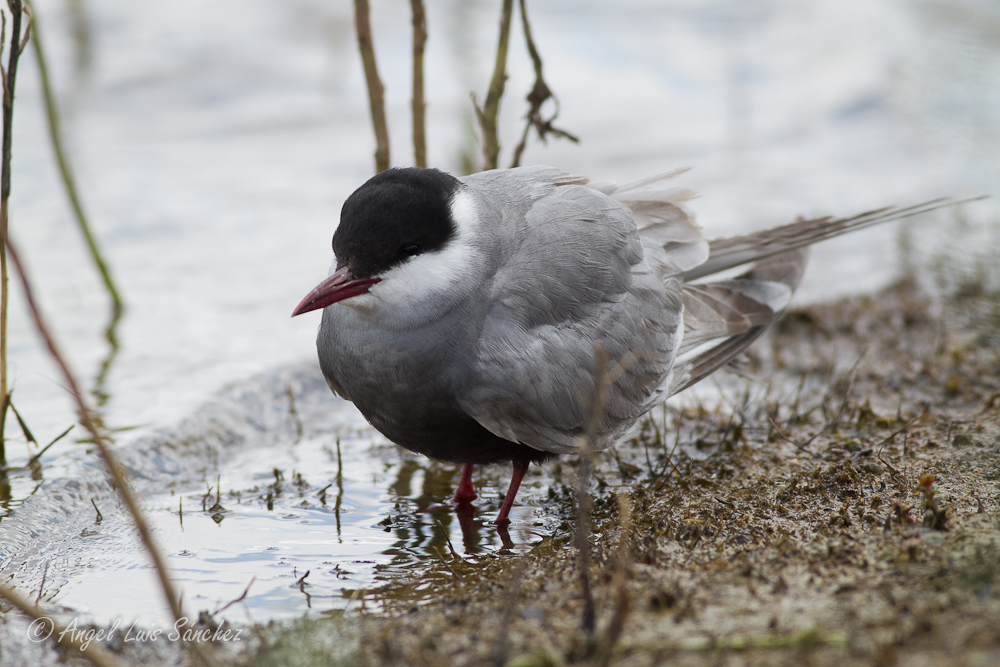
- Whiskered Tern: One at Villaba de los Barros reservoir (BA) on 01/06 (A. Núñez, F. Montaño, J. A. Leal and J. A. Román). One at Orellana reservoir (BA) on 19/06 (Á. L. Sánchez -photo-). Two at Sierra Brava reservoir, Zorita (CC), on 23/06 (M. Kelsey).
- 
European Nightjar: One or two at Montehermoso (CC) on 07/06 (C. Clemente), 18/06 (C. Clemente, E. Palacios and J. Mahillo), 24/06 (C. Clemente and J. Mahillo) and 29/06 (C. Clemente, E. Palacios, J. Mahillo and José Portillo). One at Casas del Monte (CC) at about 1400 masl on 27/06 (J. Prieta and S. Mayordomo).
- 
White-rumped Swift: In the Sierra de la Culebra, Alange (BA) one seen on 04/06 (J. A. Román) and 15/06 (F. Castro, F. Montaño and J. Solana). One seen at Peña, Alía (CC), on 08/06 (J. Cerezo). Three at River Sotillo between Azuaga and Malcocinado (BA) on 12/06 (Fergus Crystal). One at Cancho del Fresno reservoir, Cañamero (CC), on 13/06 (Godfried Schreur).
- 
Wryneck: Breeding pair at La Lapa (BA) on 12/06 (F. Montaño). One carrying food at River Guadiana in Mérida (BA) on 30/06 (C. Clemente and M. García del Rey).
- 
Skylark: At the Tornavacas Pass (CC) two on 15/06 (E. Palacios and S. Mayordomo) and present on 26/06 (C. Clemente and J. Mahillo). Two at Valdeamor peak, Cabezuela del Valle (CC), on 23/06 (J. Prieta).
- 
Tawny Pipit: A pair at Esperabán Pass, Pinofranqueado (CC), on 15/06 and seven at Majá-Robledo, Casares de Hurdes (CC), on 27/06 (Alberto Pacheco).
- 
Tree Pipit: One at pine Woods at Casa del Monte (CC) on 27/06 (J. Prieta and S. Mayordomo). Fourth possible breeding record for Extremadura.
-Rufous Bush Robin: One at Pescueza (CC) on 16/06 (Andrés Rodríguez). Four in olive Groves at  Pozuelo de Zarzón (CC) on 20/06 (C. Clemente).
- 
Common Redstart: A male at Losar de la Vera (CC) on 15/06 (C. Clemente, J. Prieta, M. García del Rey and P. Guisado). A male at Hornachos (BA) on 16/06 (L. Alcántara). Two pairs along River Hurdano at Arrolobos (CC) on 24/06 (A. Pacheco).
- 
Rufous-tailed Rock Thrush: A pair at Esperabán Pass, Pinofranqueado (CC), on 15/06 (A. Pacheco). Four, three males and a femake at Valdeamor peak, Cabezuela del Valle (CC), on 23/06 (J. Prieta). A male at Majá-Robledo, Casares de Hurdes (CC), on 27/06 (A. Pacheco).
- 
Song Thrush: A singing bird and a nest at Garganta de los Infiernos, Jerte (CC), on 16/06 (Á. Sánchez and José Luis Rivero).
- 
Western Olivaceous Warbler: Sightings of at least three birds at Azud del Guadiana, Badajoz, thoughout June (Atanasio Fernández, E. Palacios, J. C. Paniagua and S. Mayordomo). One at River Guadiana in Mérida (BA) on 30/06 (C. Clemente and M. García del Rey).
- 
Sedge Warbler: One at Arrocampo reservoir on 09/06 (E. Palacios and J. Mahillo).
- 
Common Chiffchaff: Two males singing in the pines at los Poyales , Losar de la Vera (CC), on 15/06 (C. Clemente, J. Prieta, M. García del Rey and P. Guisado).
- 
Iberian Chiffchaff: Breeding male (marked cloacal protuberance) trapped and ringed at La La Lapa (BA) on 05/06 (Hugo Gómez-Tejedor).
- 
Western Bonelli’s Warbler: Four, three amles and a female, en the pines of Los Poyales, Losar de la Vera (CC), on 15/06 (C. Clemente, J. Prieta, M. García del Rey and P. Guisado).
- 
Red-backed Shrike: A male at La Garganta (SA/CC) on 07/06 (C. Clemente). At the Tornavacas Pass (CC/AV) two males on 15/06 (E. Palacios and S. Mayordomo) and two pairs and a chick on 26/06 (C. Clemente and J. Mahillo). Three, two males and a female at El Lomo, La Garganta (CC) on 22/06 (J. Prieta).
- 
Common Crossbill: 14 at the pines at La Muela, La Garganta (CC) on 22/06 (J. Prieta)
reade more... Résuméabuiyad

wooden bird feeders

Wooden bird feeders produce a nice addition to any front yard or patio. They are great to give as gifts, especially regarding someone who enjoys chook watching. A bird feeder can provide significant amounts of joy, as well as keep backyard birds happy.

A good, wooden bird feeder need to be built to last out-of-doors. It should have any hinged top or bottom part for cleaning. There tend to be many companies that make wood birdhouse. Some firms like Schrodt Design, Inc. are environmentally aware along with use mill trim ends to create wooden bird feeders and group them with recycled supplies. This company is known for their Teahouse wooden bird feeders that are constructed of wood reduce and hand-etched glass. They are really rather beautiful and depict several charming woodland scenes that are designed by the owner of the company, Gary Schrodt. For more information go to

Another company, Countryside culture sells durable redwood and cedar wooden bird feeders that are designed like country cottages, cabins along with barns. They have birdwatcher roofs and little, bird-shaped temperature vanes. They are quite charming and look great in any garden. They also attract parrots and hold seeds well for an extended time.

To decide what model wooden bird feeders is right for you, first consider the type of birds you want for you to attract, and then after that look good in your yard or in your patio. For a formal garden you really should choose a simple however elegant wood and birdwatcher design, but for a country garden you'll probably decide to a whimsical design using bright colors.
wooden bird feeders

There are several attractive wooden bird feeders that are easy enough for one to make. For natural-looking wooden bird feeders, a branch with drilled holes filled with suet, a hollow gourd by having an opening in the part, or a pinecone filled with peanut butter make wonderful wooden wooden bird feeders. For a decorative look, use any bouquet of dried blooms with seeds, such as sunflowers or coneflowers, being a wooden bird feeders.
reade more... Résuméabuiyad

birds information

An Eclectus parrot offers you the most inspirational experience if you're a dedicated owner. These birds information are recognized for their mellow temperament and also for their unparalleled elegance. They have a very laid-back character that makes them a favorite of each and every family and you rarely see these parrots acquiring furious or misbehaving.

Eclectus birds information are recognized for their extraordinary talent to get down any mimicry. Although they just don't make strong bonds because of their pair they love to search for human attention and might get a bit noisy sometimes.

Although these parrots are scientifically referred to as Eclectus roratus, an Eclectus parrot is well know by various other names that may depend upon the species it belongs to. Different names of such types of Eclectus birds information are:

Glowing blue Bellied
Yellow Sided
Red Sided
Solomon Island
Vosmaeri
How big is do they grow?

These parrots are basically through the Solomon Islands, New Guinea and Australia. An adult parrot may well reach to approximately 17 to 20 inches when measured from their beak to tail and can cost you around $500 to $3000 PEOPLE. birds information Interestingly, the female parrot is higher priced than the male because female parrots tend to be colorful and have more gentle temperaments versus male parrot.

How does one differentiate their sexes?

Eclectus birds information sexes might be differentiated by their color as they are sexually dimorphic parrots. If you see the bright green color about the head of these parrots, along with the yellow green blended wing covert, then you can ascertain it's a male parrot. These male parrots furthermore have red patches below their wings and round the breast area. The tail will likely be almost black with the yellow tip. The iris will likely be of dark orange along with the beak may have the black color at it is lower base.

A female bird might be identified when you notice them having rich red colorization on their breast as well as their head. They have deep red wings that has a dull blue and violet belly. The tail might be identified with an orange tip along with the eyes will birds information have the blue ring around these.

How about their personality?

These birds information are a very intelligent species with an extremely passionate personality. They love the companionship of humans and enjoy socializing with people. If you want to keep an Eclectus parrot and also other birds information, then this is unquestionably possible.

However, you must keep a wristwatch out, as you might see some sort of jealous tendencies.

Eclectus birds information will demand a large cage as they need a great deal of space for their property requirements and mostly consume eating better consisting of fresh fruits and vegetables.
birds information

These parrots are highly intelligent that birds information has a charming personality and is often rather impressive with their ability to talk and they will become passionate pets. They love to interact with every member of the family making them quite hypersensitive in nature birds information.
reade more... Résuméabuiyad

6 Jul 13 - Butterflies steal the show

I had an early start this morning to catch the high-tide wader roost at Breydon Water. Although the light was great, it reflected the fine, calm weather, which in turn resulted in a rather low tide which didn't cover much of the estuary and the wader roost was practically a non-event with only 5 Med Gulls, 1 Greenshank, 4 Whimbrel and small numbers of Avocet, Black-wits and Curlew. Other than a single Ringed Plover, there were no small waders.

I then headed up to Rush Hills Scrape at Hickling, hoping that there might be some waders on the scrape, but unfortunately it's pretty dried out and other than a few Lapwing there were no waders present.

Rush Hills Scrape looking rather dried up
 
The best thing about the walk out to the scrape though, was the insets, especially the Swallowtail Butterflies feeding on the Red Campion right next to the footpath. With a bit of patience it was possible to get some really nice views and photos of these lovely insects.


reade more... Résuméabuiyad

LITTLE SWIFT: BACK AGAIN IN ALANGE

Little Swift (Apus affinis) photographed in Cádiz by Ricardo Rodríguez. 
Photo taken from blog: Aves Ricardo Rodríguez. 

 Just over a year ago, on 20th June 2012, the first Little Swift (Apus affinis) was seen in Extremadura, specifically in Alange (Badajoz), the only place in the region where all of the Iberian swift species have been seen. The lucky observer was José Antonio Román. Now, in 2013 and at the same place, Little Swift has been seen again, and who knows, possibly the same individual bird is involved. It was located on 1st July by Sergio Pérez Gil and on 3rd July by José Antonio Román. The bird flew over the crags there as well as over the town and on both occasions it was seen in the evening (at about 20.00). The possibility exists that it may even be nesting there. The species is no longer considered a national rarity and these new observations, which we hope will not the only ones of the season, are considered reliable. Up until now, all breeding records in Spain have been limited to three provinces in Andalucía (mainly Cádiz, and also Sevilla and Málaga).

Translated by Martin Kelsey.
reade more... Résuméabuiyad